
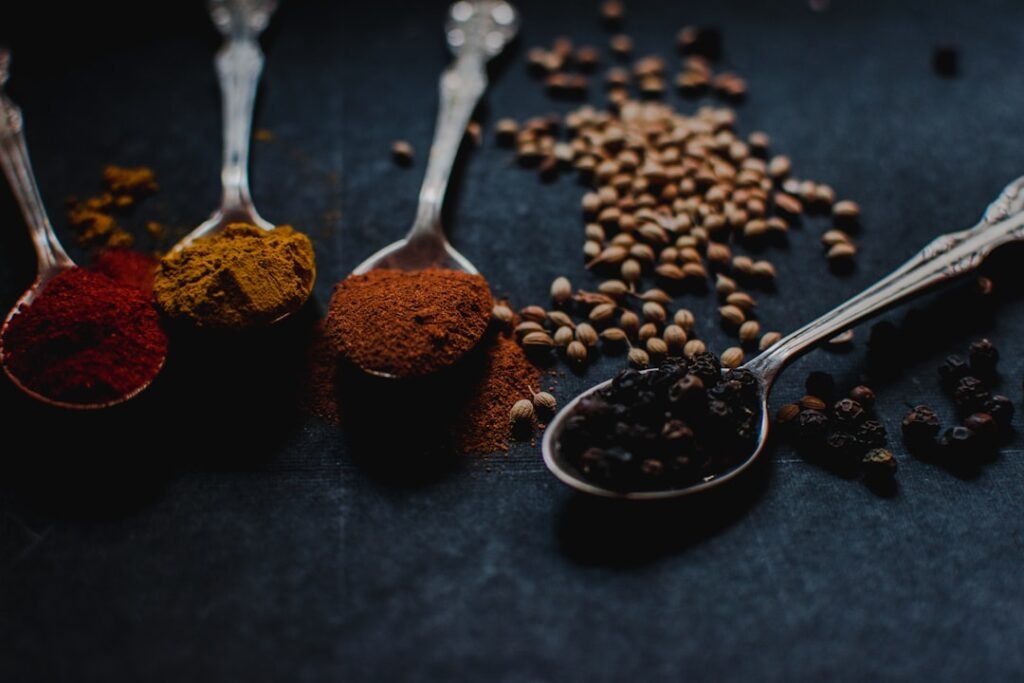
There is a small basket in my kitchen cabinet that has saved me more money and more dinnertime arguments than I can count. It holds about a dozen little jars — some repurposed, some labeled in my own handwriting with a marker — and every single one is filled with a spice blend I made myself. No mystery ingredients. No sodium bombs. No flavor packets that cost three dollars and contain things I cannot pronounce. Just herbs, spices, and the kind of flavor that makes my boys actually ask what is for dinner instead of groaning about it.
If you have ever grabbed a taco seasoning packet, a ranch dressing mix, or one of those foil pouches for slow cooker pot roast, I am not here to judge you. I used those things for years. But once I started looking at the sodium content on those little packets — some of them packing over 500 milligrams per serving — I realized I was doing a lot of extra work to undo the nutritional damage at the dinner table. My boys are hungry and active. They need real food with real flavor. And it turns out, making your own spice blends is one of the easiest, most affordable ways to deliver exactly that.
This post is your practical guide to building a collection of homemade spice blends and dry rubs that will genuinely transform your weeknight cooking — without spending hours in the kitchen or a fortune at the grocery store.
Why Store Bought Seasoning Packets Are Quietly Wrecking Your Nutrition Goals
I want to be clear — this is not about being a food snob. This is about reading labels honestly. Most commercial seasoning packets and spice blends are loaded with sodium, anti-caking agents, artificial flavors, and sometimes even sugar as a primary ingredient. When you are cooking for a family of six every single night, those additives add up fast.
According to the CDC’s sodium guidelines, most Americans consume far more sodium than the recommended 2,300 milligrams per day — and processed seasonings are one of the sneaky contributors that fly under the radar. We think we are cooking from scratch, but that little packet is doing a lot of hidden work we did not sign up for.
When you make your own blends, you control everything. You can dial back the salt, lean into the herbs and aromatics, and actually taste the food rather than just the sodium. My boys have no idea that our tacos are lower in sodium than the restaurant version. They just know they taste incredible.
What You Actually Need To Get Started
You do not need a fully stocked spice wall to do this well. Start with what you already have and build from there. Here are the foundational spices that make up the backbone of most of the blends I use week after week:
- Cumin — earthy and warm, essential for anything with a southwestern or Mediterranean lean
- Smoked paprika — adds depth and a subtle smokiness without any actual smoking
- Garlic powder — not the same as garlic salt, make sure you are grabbing the right one
- Onion powder — underrated and works in almost everything
- Dried oregano — Italian and Mexican dishes both rely on this one
- Chili powder — a blend itself, but a useful base ingredient in your homemade blends
- Black pepper — freshly ground if possible, but ground works fine for bulk blending
- Dried thyme — lovely in anything roasted or slow cooked
- Cayenne pepper — use sparingly, but it adds a brightness that makes flavors pop even when it is not noticeably spicy
- Kosher salt — yes, you will use some salt, but you will use far less than any packet because you are in control
Buy these in bulk from a store like Costco, BJ’s, or even the bulk spice section at your local Connecticut grocery store or co-op when you can. The savings are significant and the quality is often better than the tiny jars.
Five Homemade Spice Blends That Run My Weeknight Kitchen
These are the blends I make in small batches, store in labeled jars, and reach for constantly. Each one takes about three minutes to mix. I keep them in the cabinet right above my stove so they are always within reach when dinner needs to happen fast.
All-Purpose House Seasoning — This is the one I use on literally everything. Roasted vegetables, chicken thighs, ground turkey, eggs, popcorn. Mix together two tablespoons garlic powder, two tablespoons onion powder, one tablespoon smoked paprika, one tablespoon black pepper, and one tablespoon kosher salt. That is it. I make a double batch every few weeks and it never lasts long in a house with four boys.
Homemade Taco and Fajita Blend — Mix together two tablespoons chili powder, one tablespoon cumin, one teaspoon smoked paprika, one teaspoon garlic powder, one teaspoon onion powder, half a teaspoon dried oregano, half a teaspoon black pepper, and a quarter teaspoon cayenne. Use one to two tablespoons per pound of meat. This replaces those foil packets completely and costs a fraction of the price.
Italian Herb Blend — Perfect for pasta nights, sheet pan chicken, homemade pizza, and roasted vegetables. Combine two tablespoons dried oregano, two tablespoons dried basil, one tablespoon dried thyme, one tablespoon garlic powder, one teaspoon onion powder, and one teaspoon red pepper flakes. My 15-year-old started making his own pizza on Friday nights using this blend, and it has become something I genuinely look forward to every week.
Smoky BBQ Dry Rub — This one is a game changer for oven-baked ribs, pork tenderloin, and grilled chicken. Mix two tablespoons smoked paprika, one tablespoon brown sugar, one tablespoon garlic powder, one tablespoon onion powder, one teaspoon cumin, one teaspoon black pepper, one teaspoon kosher salt, and half a teaspoon cayenne. Rub it generously onto your protein and let it sit for at least thirty minutes before cooking. The results are worth every second of wait time.
Warm Roasting Blend For Vegetables — This one gets used almost every single night at our table because we roast vegetables constantly. Combine one tablespoon cumin, one tablespoon smoked paprika, one teaspoon turmeric, one teaspoon garlic powder, one teaspoon coriander, half a teaspoon black pepper, and half a teaspoon kosher salt. Toss with olive oil and whatever vegetables need to be used up. My 6-year-old has started calling these “golden vegetables” because of the color turmeric gives them, and that is honestly the best marketing I have ever managed.
How To Actually Use These Blends Without Overthinking It
The beauty of having these jars ready to go is that dinner decisions become dramatically simpler. You are not improvising from scratch every night — you are just choosing a direction and grabbing the right blend. Here is how I think about it:
- Pick your protein — chicken, ground turkey, pork, eggs, beans, whatever you have
- Choose a blend that fits the mood or the cuisine direction for the night
- Apply generously — do not be timid with dry seasoning, most of the flavor comes from being bold
- Let it sit if you can — even fifteen minutes makes a real difference
- Cook your protein, roast your vegetables with the same or complementary blend, and you have dinner
If you are already cooking with chicken thighs regularly — which I highly recommend for both flavor and budget — these blends are going to take your weeknight meals to a completely different level. Our guide to cooking healthy family dinners with chicken thighs pairs beautifully with the smoky BBQ rub or the all-purpose house seasoning for a dinner that comes together in under thirty minutes.
Getting Your Kids Involved In Making Spice Blends
This is one of my favorite kitchen activities for a homeschool afternoon that does not feel like school at all. Measuring spices requires real math. Learning what each spice smells like and where it comes from is actual geography and science. And creating something together that the whole family uses every night is one of those quiet lessons about contribution and belonging that I never have to spell out explicitly.
My 10-year-old is now in charge of refilling our taco blend jar. He takes that responsibility seriously, and he is proud every time someone compliments taco night. My 12-year-old helped me develop the warm roasting blend after we talked about anti-inflammatory spices like turmeric and how they support our bodies — a natural extension of the nutrition conversations we have at the dinner table.
The Academy of Nutrition and Dietetics notes that many herbs and spices contain antioxidants and anti-inflammatory compounds that add genuine nutritional value beyond just flavor — which makes this an easy conversation to have with kids who are old enough to understand why food quality matters.
Even my 6-year-old can pour pre-measured spices into a jar and shake it to mix. Give a child a job in the kitchen and they will eat whatever came out of that kitchen. That is practically a law at our house.
Storing Your Blends And Keeping Them Fresh
Spice blends keep well for three to six months when stored properly. Here is what works in my kitchen:
- Use small glass jars with tight-fitting lids — repurposed jam jars or small mason jars work perfectly
- Label everything with the name and the date you made it using a piece of masking tape and a marker
- Store away from heat and direct sunlight — not right next to your stove if you can help it
- Make smaller batches more frequently rather than large batches that sit for months and lose potency
- Smell your blends before using — if the aroma is weak, the flavor will be too
I also keep a simple index card inside my spice cabinet with each blend recipe written out. That way when something runs out in the middle of a busy week, whoever needs to refill it can do so without hunting for a recipe on their phone.
The Real Cost Savings For Connecticut Families
Let me give you real numbers because this matters. A single taco seasoning packet at most Connecticut grocery stores costs between $1.25 and $2.00. My homemade taco blend costs roughly $0.15 to $0.20 per use when I buy spices in bulk. Over the course of a year for a family that does taco night even twice a month, that is a meaningful difference — and that is just one blend.
Multiply that across all the seasoning packets, spice mixes, and pre-made rubs you currently buy and you are looking at a real line item in your grocery budget that can be redirected toward better quality produce, proteins, or just a little breathing room in a tight month. For families here in Connecticut where grocery costs are consistently higher than the national average, those savings are not trivial.
If you are working on building a smarter, more strategic approach to feeding your family well without overspending, our guide to cutting your grocery bill without cutting nutrition is a great companion to this one.
Start With One Blend This Week
You do not need to overhaul your spice cabinet in an afternoon. Just start with one blend — the all-purpose house seasoning is the easiest entry point — and use it every night this week. Notice how the cooking feels more confident when the flavor decision is already made. Notice how much your family responds when the food tastes like it was made with intention.
That is what good seasoning does. It is not just about sodium or saving money, though both of those things matter. It is about cooking food that gathers people around a table and makes them glad to be there. In this house, around this table, that matters more than almost anything.
I hope these blends make your Connecticut kitchen a little easier, your dinners a little more flavorful, and your grocery receipt a little lighter. Now go make something delicious.
