
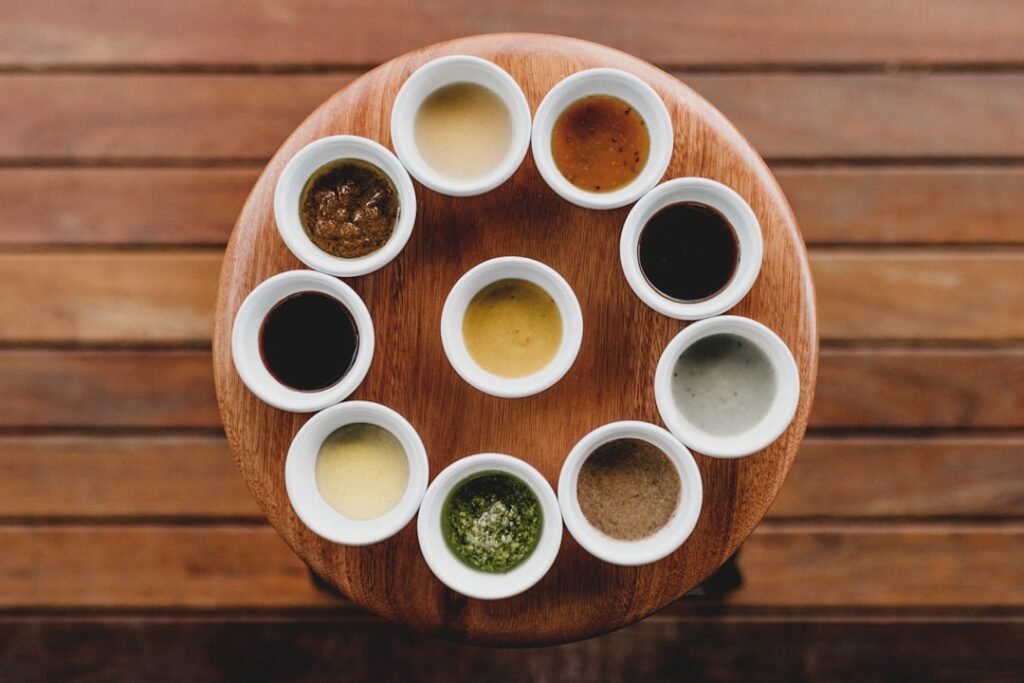
There is a bottle of something in almost every refrigerator in Connecticut right now that is quietly working against your family’s health goals. It might be a teriyaki sauce, a store-bought marinara, a bottled salad dressing doubling as a marinade, or one of those sweet barbecue sauces your kids beg for every summer. The label looks harmless enough — until you flip it over and see the high fructose corn syrup, the sodium count that would make a cardiologist wince, and a list of preservatives you cannot pronounce.
I have been there. For years, I grabbed those bottles without thinking twice because dinner needed to happen fast and there were four hungry boys in the next room. But once I started actually reading labels, I knew something had to change. The good news? Making your own sauces and marinades at home is one of the simplest, most affordable swaps you can make — and the flavor payoff is genuinely remarkable. Once you go homemade, those store-bought bottles start tasting like exactly what they are: cheap shortcuts loaded with things your family does not need.
This guide is for busy Connecticut moms who want to add real, clean flavor to their family dinners without spending hours in the kitchen or buying a pantry full of exotic ingredients. Everything here is practical, family-tested, and built for real weeknight cooking.
Why Store-Bought Sauces Are More Problematic Than You Think
Most of us reach for bottled sauces out of convenience, and there is nothing wrong with wanting dinner on the table faster. But the nutritional tradeoffs are real. Many popular store-bought marinades and sauces contain significant amounts of added sugar, excess sodium, artificial colors, and preservatives that have no business being in a home-cooked meal.
According to the American Heart Association, most Americans consume far too much sodium daily — and a big portion of that comes not from the salt shaker but from packaged and processed foods, including condiments and cooking sauces. For growing kids, excess sodium and added sugars can contribute to poor eating habits that follow them into adulthood.
When I started making our own sauces, I was honestly shocked at how much sugar was hiding in the bottles I had trusted for years. Some of those teriyaki and barbecue sauces had as much sugar per serving as a candy bar. That is not seasoning — that is dessert masquerading as dinner.
The Simple Pantry Foundation For Homemade Sauces
You do not need a specialty grocery store or an enormous spice collection to make excellent sauces at home. Most of what you need is probably already in your kitchen. Here is what I keep stocked to build sauces and marinades on the fly:
- Olive oil — the base for most marinades and many pan sauces
- Low-sodium soy sauce or coconut aminos — adds umami depth without the sodium overload
- Apple cider vinegar and red wine vinegar — brightens flavors and works beautifully in marinades
- Honey or pure maple syrup — natural sweetness you control, in the amount you choose
- Garlic — fresh cloves or a good quality garlic powder for faster meals
- Dijon mustard — emulsifies dressings and adds a subtle tang to marinades
- Canned crushed tomatoes — the foundation of a great homemade marinara
- Dried herbs — Italian seasoning, smoked paprika, cumin, oregano, thyme
- Lemon and lime — fresh citrus juice transforms a simple marinade into something special
- Worcestershire sauce — a small splash goes a long way in beef and chicken dishes
If you have worked on building a healthy family pantry from scratch, you likely have most of this already. Sauces and marinades become almost effortless once your pantry foundation is solid.
Four Homemade Sauces My Boys Actually Love
I am not going to share recipes that sound great in theory but get ignored at the dinner table. These four sauces have been served to real, opinionated, hungry boys — ranging from my 6-year-old who considers ketchup a food group to my 15-year-old who is genuinely starting to care about what he puts in his body. They all pass the family test.
Simple Homemade Marinara
This is the sauce I make most often. It takes about 25 minutes, costs a fraction of jarred marinara, and contains nothing but real food. Heat a couple tablespoons of olive oil in a heavy saucepan over medium heat. Add three or four minced garlic cloves and cook for about a minute until fragrant. Pour in a 28-ounce can of crushed tomatoes, add a generous pinch of dried Italian seasoning, a pinch of sugar (just a small one to balance the acidity), salt, and a handful of fresh basil if you have it. Simmer for 20 minutes, stirring occasionally. That is it. No added sugars beyond that small balancing pinch, no mystery ingredients, and the flavor is genuinely better than anything in a jar.
I use this on pasta nights, as a dipping sauce for baked chicken strips, over zucchini noodles when we want something lighter, and even as a base for homemade pizza on Friday nights. It freezes beautifully in mason jars, so I always make a double batch.
Honey Garlic Marinade
This one works on chicken thighs, salmon, pork tenderloin, and even tofu. Mix together three tablespoons of low-sodium soy sauce or coconut aminos, two tablespoons of honey, one tablespoon of apple cider vinegar, two minced garlic cloves, and a teaspoon of fresh grated ginger if you have it. Whisk together and pour over your protein. Thirty minutes is enough — overnight is even better. The honey caramelizes beautifully in the oven or on the grill, and every single one of my boys will eat whatever protein I marinate in this without complaint. That alone is worth its weight in gold.
Smoky Homemade Barbecue Sauce
Summer cookouts in Connecticut practically require barbecue sauce, and this one has become our family staple. Combine one cup of crushed tomatoes or tomato sauce, two tablespoons of apple cider vinegar, two tablespoons of honey or maple syrup, one tablespoon of Worcestershire sauce, one teaspoon of smoked paprika, half a teaspoon of garlic powder, and a pinch of black pepper in a small saucepan. Simmer on low for about 15 minutes, stirring until it thickens slightly. The smokiness comes entirely from the paprika — no artificial smoke flavors needed. This is the sauce my 12-year-old now makes himself when we are grilling, and I love watching him take ownership of a part of our family meal.
Lemon Herb Marinade For Fish And Chicken
This is the simplest one on the list and possibly the most versatile. Whisk together the juice of one lemon, three tablespoons of olive oil, two minced garlic cloves, one teaspoon of dried oregano or Italian seasoning, salt, and black pepper. That is the whole recipe. It takes two minutes and it makes tilapia, cod, chicken breasts, and shrimp taste like something from a restaurant. We use it at least once a week, usually on our fish nights. If you have been trying to get more fish on the table for your family, a marinade like this is exactly the kind of thing that makes it actually happen. My post on cooking healthy family dinners with fish and seafood goes deeper into that if you need more ideas.
Tips For Making Homemade Sauces Work On Busy Weeknights
The biggest obstacle most moms face when switching to homemade sauces is time — or the perception of it. Here is what has actually worked in our house to make this sustainable, not just a one-week experiment:
- Batch make on Sunday. I often spend 20 minutes on Sunday afternoon whisking together a jar of marinade and simmering a pot of marinara. Both go in the fridge and make three or four dinners easier before I have to think about it again.
- Use mason jars and label them. When sauces are visible in clear jars in the fridge, you actually use them. Unlabeled containers get ignored.
- Start the marinade in the morning. On homeschool days, I will mix a marinade before we sit down for morning lessons and drop chicken thighs in a zip bag in the fridge. By dinner, all I have to do is cook them. No extra effort in the afternoon chaos.
- Keep the ingredient list short. The best homemade sauces are four to six ingredients. If a recipe requires more than that on a weeknight, save it for the weekend.
- Get your kids involved. My 10-year-old loves measuring and whisking. My 15-year-old has started experimenting with his own spice combinations. The kids who help make the sauce are almost always the ones who eat what it goes on without complaint.
A Word About Sodium And Sugar In Homemade Sauces
One of the greatest advantages of making your own sauces is complete control over sodium and sweeteners. The USDA Dietary Guidelines recommend limiting added sugars to less than 10 percent of daily calories — something that becomes extremely difficult when store-bought sauces are adding hidden sugar to every meal. When you make your own, you decide how much honey goes in. You decide how much soy sauce. That control adds up in a meaningful way over a week of family dinners.
For our family, switching from bottled to homemade sauces was one of the most impactful changes we made without anyone feeling deprived. My boys did not miss the sugar-heavy teriyaki from a bottle once they tasted the honey garlic version I made from scratch. Real food, when it is seasoned well, does not feel like a compromise.
Teaching Your Kids The Language Of Flavor
There is something I love about teaching my boys to make sauces from scratch that goes beyond the practical benefit of healthier eating. When a child understands that acid brightens flavor, that fat carries and distributes seasoning, that sweetness balances bitterness — they are learning a language. The language of cooking. It is one of the most transferable life skills I can give my boys, and it starts with something as simple as whisking together a marinade and tasting it before it goes on the chicken.
My 12-year-old once told me that the barbecue sauce he made himself tasted better than any he had ever had. He was right — but part of what made it taste better was that he made it. There is a kind of pride and ownership in that which no bottle of store-bought sauce can provide. As a homeschool mom, I count that as a real lesson.
The Bottom Line On Homemade Sauces For Busy Families
You do not have to overhaul your entire kitchen or spend your Saturdays cooking to make this work. Start with one sauce — the marinara, the honey garlic marinade, whichever sounds most useful for your family this week. Make it once, see how your family responds, and build from there. Within a month, you will have a small rotation of homemade sauces that replace the bottles you used to grab without thinking, and your dinners will be better for it in every measurable way.
Feeding your family well does not always require grand gestures. Sometimes it is as simple as whisking together six ingredients in a bowl instead of reaching for a bottle. That small choice, made consistently, adds up to something real — cleaner meals, more flavor, and a little more intention at the dinner table every single night.
