
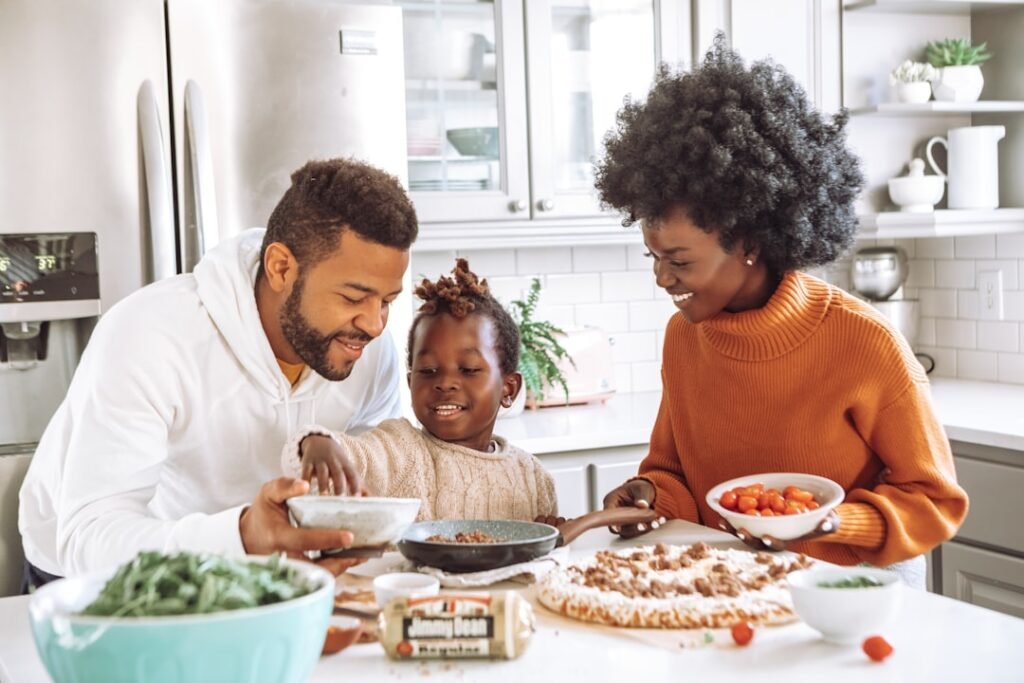
Friday night pizza night is basically sacred in our house. After a full week of homeschooling, after-school activities, Bible study, and whatever else life threw at us, there is something deeply restorative about everyone piling into the kitchen together to make pizza from scratch. My boys light up for it every single week. Even my 6-year-old knows that when I pull out the dough, it’s time to wash his hands and get ready to help.
But here’s the honest truth I had to work through early on: pizza has a reputation problem. Most families either order it from a place loaded with processed toppings and refined flour, or they grab those pre-made crusts from the store that are basically cardboard with a long ingredient list. I knew there had to be a better way — a version of pizza night that still felt like a treat, still made my boys actually cheer, and still gave them real nourishment. After a lot of trial and error in this Connecticut kitchen, I found it. And I want to share every bit of it with you today.
Why Homemade Pizza Is One Of The Smartest Meals You Can Put On The Table
When you make pizza at home, you control everything. The flour in your crust, the sugar in your sauce, the quality of your cheese, and every single topping. That matters more than most people realize. Store-bought pizzas and restaurant pizzas are often loaded with sodium, saturated fat from low-quality cheese blends, preservatives, and added sugars hiding in the sauce. The American Heart Association consistently flags sodium as one of the biggest hidden dangers in convenient foods — and pizza is one of the worst offenders.
Making it yourself flips all of that. You can use whole wheat flour to boost fiber, load the toppings with vegetables your kids will actually eat, use part-skim mozzarella to cut saturated fat, and make a quick homemade sauce with no added sugar. The whole thing costs a fraction of delivery, and the experience of making it together is something no pizza box can ever give you.
Start With A Simple Whole Wheat Pizza Dough
I know the word dough can feel intimidating, but I promise you — this is genuinely one of the easiest things to make in a family kitchen. My 12-year-old makes our dough from start to finish most weeks now, and my 10-year-old is right there learning alongside him. That is the beauty of pizza night — it is one of the best kitchen teaching moments you will ever have.
For a dough that makes two large pizzas (enough to feed our family of six with leftovers for lunch the next day), we use:
- 2 and a quarter teaspoons of active dry yeast (one standard packet)
- 1 cup warm water (not hot — warm like bathwater)
- 1 tablespoon honey
- 1 and a half cups whole wheat flour
- 1 cup all-purpose flour (the blend makes it easier to work with)
- 1 teaspoon salt
- 2 tablespoons olive oil
Dissolve the yeast and honey in the warm water and let it sit for about five minutes until it gets foamy — that means your yeast is alive and happy. Mix in the flours, salt, and olive oil, then knead the dough on a floured surface for about eight minutes until it is smooth and elastic. Cover it with a clean kitchen towel and let it rise in a warm spot for one hour. Done. That is your whole wheat crust — fiber, real ingredients, and zero mystery.
If you are pressed for time on a Friday night, you can make the dough the night before and let it rise slowly in the refrigerator overnight. Just pull it out about 30 minutes before you are ready to use it. I do this almost every week and it actually makes the dough taste even better.
Make A Quick No-Sugar-Added Tomato Sauce
Most jarred pizza sauces have added sugar — some have more than you would ever expect. Making your own takes about ten minutes and tastes infinitely better. We keep it simple:
- One 15-ounce can of crushed tomatoes (look for no-salt-added)
- 2 cloves of garlic, minced
- 1 tablespoon olive oil
- 1 teaspoon dried oregano
- Half a teaspoon dried basil
- A pinch of red pepper flakes if your family likes a little warmth
- Salt and black pepper to taste
Heat the olive oil in a small saucepan over medium heat, add the garlic, and cook for one minute. Add the crushed tomatoes and seasonings, stir it all together, and let it simmer for about eight minutes. That is your sauce. It stores in the refrigerator for up to a week, so you can make it ahead on Thursday night when things are calmer.
The Toppings Strategy That Gets My Boys To Eat More Vegetables
This is where pizza night becomes a genuine nutrition win, and I want to be very honest with you about how this works in real life. You do not just pile vegetables on the pizza and announce that everyone is eating them tonight. That approach will fail every time, especially with a 6-year-old who has opinions about everything touching his food.
What works in our house is the topping bar. I prep a selection of toppings in small bowls and set them out on the counter. Each boy builds his own half or his own small personal pizza. When kids feel ownership over their food, they eat it — this is something I have learned over years of feeding four very different boys. My full guide on getting kids to eat more vegetables goes deep on this approach, but pizza night is honestly one of the easiest places to apply it.
Some of the toppings we put out regularly:
- Vegetables: sliced bell peppers, baby spinach, mushrooms, thinly sliced zucchini, cherry tomatoes halved, roasted broccoli florets, caramelized onions
- Proteins: cooked ground turkey seasoned with Italian spices, diced grilled chicken, turkey pepperoni (much lower in fat than regular), a few slices of nitrate-free Canadian bacon
- Cheeses: part-skim shredded mozzarella, a little fresh Parmesan grated over the top, or a small amount of goat cheese for the adults
- Extras: fresh basil leaves added after baking, a drizzle of olive oil, a sprinkle of red pepper flakes
My 15-year-old loads his pizza with spinach, mushrooms, and grilled chicken because he is genuinely starting to care about protein and nutrition. My 6-year-old puts cheese, turkey pepperoni, and exactly three pieces of bell pepper because that is where we are right now — and I celebrate that because three pieces of bell pepper is three more than he would eat if I just put them on his plate without asking.
Baking Tips That Make Your Crust Crispy Instead Of Soggy
A soggy crust is the number one reason homemade pizza disappoints people, and it is completely avoidable. Here is what makes the difference:
- Preheat your oven to 475 degrees Fahrenheit. High heat is everything. Most home ovens do not get used at this temperature often, but pizza needs it.
- Preheat your baking sheet or pizza stone in the oven while it heats up. Sliding your pizza onto a hot surface makes the bottom crisp immediately.
- Do not overload the sauce. Use a thin, even layer — about three tablespoons per 12-inch pizza. More sauce means more moisture, which means soggy crust.
- Pat wet toppings dry before adding them. Fresh mushrooms and spinach hold a lot of water. A quick pat with a paper towel before they go on the pizza makes a real difference.
- Bake for 12 to 15 minutes until the crust is golden and the cheese is bubbling with a few golden spots. Every oven is different, so watch it the first few times.
How To Make Pizza Night A Weekly Rhythm That Feeds Your Family Well
We treat Friday pizza night less like a recipe and more like a weekly ritual. It marks the end of the school week, it brings everyone into the kitchen together, and it gives me a reliable dinner anchor that I do not have to think too hard about. When you are already doing a weekly dinner rotation to reduce the mental load, pizza night is one of the easiest slots to fill because the whole family already loves it.
The practical rhythm looks like this: I make the dough Thursday night. I make the sauce then too if I have an extra ten minutes. Friday afternoon, I prep the topping bar while the boys are finishing up their last subjects. By the time we are ready to cook, everything is ready to go and dinner takes about 30 minutes from start to table. That is faster than delivery, cheaper than delivery, and infinitely more nutritious.
The USDA MyPlate guidelines remind us that a balanced meal includes vegetables, lean protein, and whole grains — and a well-built homemade pizza actually hits all three in one dish. That is something I love being able to point out to my boys during our school week. Real-life nutrition lessons show up in the most unexpected places when you are a homeschool family.
What To Do With Leftover Pizza (And Why You Should Make Extra On Purpose)
Cold leftover pizza for Saturday morning lunch is a time-honored tradition in homes with boys, and I am not going to argue with it. But I will tell you that leftover pizza also makes an excellent quick dinner base if you are smart about it. I always make a third pizza on Friday night with the intention of having it left over. We wrap it tightly and refrigerate it, and it reheats beautifully in a 375-degree oven for about eight minutes — far better than the microwave, which turns the crust into rubber.
You can also turn leftover pizza dough into calzones, breadsticks, or little flatbreads for school lunches the next day. Nothing goes to waste in a family of six. That is just the way it has to work, and over the years I have come to see it as a kind of stewardship — using what we have been given and not letting it go to the trash when it can feed someone.
This Is The Kind Of Meal That Becomes A Family Memory
I think about the rhythm of our family table a lot. I think about what my boys will carry with them when they are grown — what smells will take them back to childhood, what traditions will feel like home. Friday pizza night is one of those things. The flour on the counter, the smell of garlic and oregano, everyone crowded in the kitchen arguing about whose pizza looks better — those are the moments I want to hold onto.
Food nourishes the body, but it also nourishes something deeper in a family. When we gather around something we made together, there is a kind of grace in that. I do not take it lightly, even on the most chaotic Fridays — and in a house with four boys, chaotic is the baseline.
Start with one Friday. Make the dough, make the sauce, set out the toppings, and let your kids build their own. I think you will be surprised how quickly it becomes the night everyone in your family looks forward to most — and how good it feels to know exactly what is in the food on your table.
