
There is a specific kind of chaos that happens in my kitchen around 5:30 on a Tuesday evening. My 15-year-old is finishing up a math lesson at the kitchen table. My 12-year-old just came in from outside, still loud. My 10-year-old is asking me for the third time what is for dinner. And my 6-year-old is sitting on the counter, which I have asked him not to do approximately four hundred times. This is my life, and I love it deeply — but dinner still has to happen.
What has saved me more times than I can count is having a simple, flexible framework for dinner that does not require me to have everything perfectly prepped, perfectly timed, or perfectly executed. Grain bowls are exactly that. They look impressive. They taste incredible. They are endlessly customizable, which matters enormously when you have four boys with four different opinions about whether tomatoes belong in food. And they are genuinely nutritious in a way that fills up hungry kids without leaning on processed ingredients.
If you have never built a grain bowl for dinner before, I want to walk you through exactly how I do it — from what goes in my pot to how I get my boys to actually eat it without complaints. This is real family cooking, and it works.
What Makes A Grain Bowl Actually Healthy
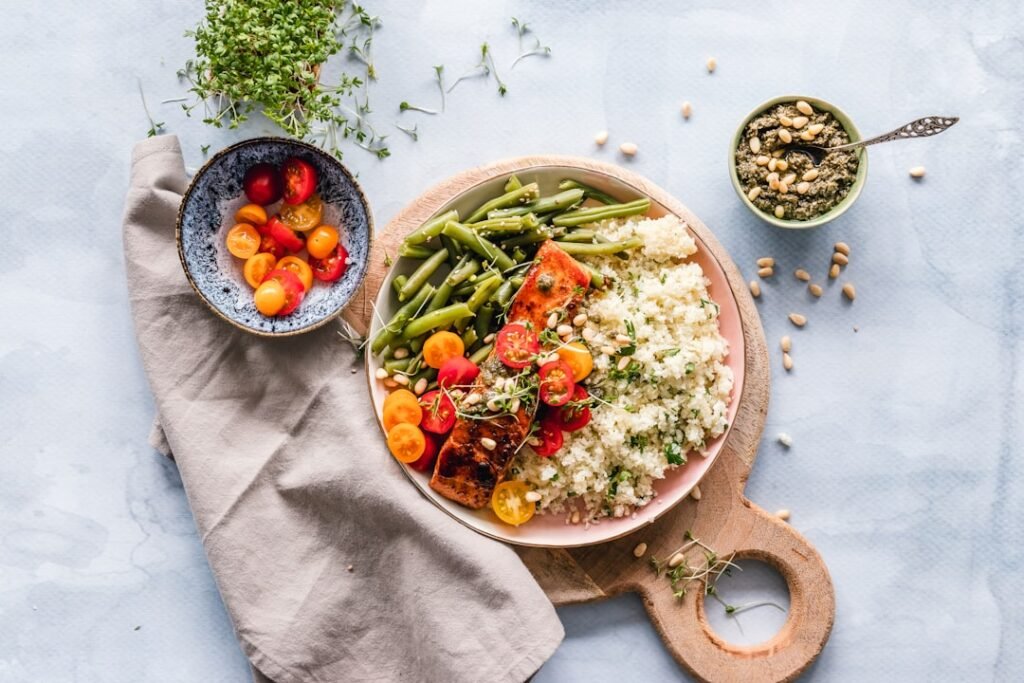
A grain bowl is not just a trendy lunch idea from a health food Instagram account. When built thoughtfully, it is a complete, balanced meal that checks every nutritional box your family needs. The structure is simple: a whole grain base, a quality protein, roasted or fresh vegetables, a healthy fat, and a flavorful sauce or dressing to tie it all together.
That combination gives you complex carbohydrates for sustained energy, protein to keep kids full and focused, fiber from the grains and vegetables to support digestion, and healthy fats to support growing brains. According to the Academy of Nutrition and Dietetics, whole grains provide important nutrients including B vitamins, iron, folate, selenium, and fiber — all of which are critical for growing children and busy parents alike.
For my family, grain bowls hit the sweet spot between nutritious and satisfying. My boys are not eating kale salads without protest. But give them a bowl with warm farro, crispy roasted chicken thighs, roasted sweet potato, a handful of shredded cheese, and a drizzle of honey mustard dressing — and they are asking for seconds. That is the goal.
The Five Components Of A Great Family Grain Bowl
I teach my boys to think of grain bowls in five layers, and we actually use this as a homeschool cooking lesson. Each layer serves a purpose, and once you understand the formula, you can build a new bowl every single week without getting bored.
Layer One: The Grain Base
This is the foundation of the bowl. I rotate between brown rice, farro, quinoa, barley, and bulgur wheat depending on what I have in my pantry. Brown rice is the most affordable and the one my younger boys are most familiar with. Farro has a satisfying chewiness that my older boys love. Quinoa cooks fast and gives you an extra protein boost, which is great on nights when I am keeping the rest of the bowl lighter. I usually cook a large batch of grain at the start of the week so it is ready to go on busy evenings. If you want more guidance on cooking with these grains, I covered them in depth in my post on healthy whole grain dinners your hungry family will actually finish.
Layer Two: The Protein
This is what makes the bowl filling and sustaining. For my crew, I rotate through chicken thighs, ground turkey, hard-boiled eggs, roasted chickpeas, canned tuna, and sliced pork tenderloin. The protein does not need to be elaborate — it just needs to be seasoned well and cooked properly. Rotisserie chicken is one of my absolute favorite shortcuts for grain bowl nights. Pull it apart, toss it over the bowls, and dinner is done in under fifteen minutes once your grain is cooked.
Layer Three: The Vegetables
This is where I sneak in the most nutrition, and roasting is my secret weapon. Roasted vegetables taste completely different from steamed or raw — they get caramelized edges and a depth of flavor that even my most skeptical eaters accept without drama. I roast whatever is in the refrigerator: broccoli, zucchini, carrots, bell peppers, sweet potatoes, Brussels sprouts, or cauliflower. I toss them in olive oil, season with salt and garlic powder, and roast at 400 degrees until they are golden. Simple, fast, and genuinely delicious.
Layer Four: The Toppings
This is the layer that makes my kids feel like they have some control over their dinner, which dramatically reduces complaints. I set out small bowls of toppings and let everyone add what they want. Options we rotate through include shredded cheese, sliced avocado, cucumber, cherry tomatoes, sunflower seeds, raisins, sliced almonds, crumbled feta, or a soft-boiled egg. My 6-year-old usually picks cheese and cucumbers. My 15-year-old loads up on everything. Everyone is satisfied.
Layer Five: The Sauce Or Dressing
A great sauce is the difference between a bowl that tastes like diet food and one that tastes like something you actually want to eat. I make simple homemade dressings most nights — honey mustard, lemon tahini, simple balsamic vinaigrette, or a yogurt-based ranch. A basic honey mustard takes two minutes: two tablespoons of Dijon mustard, one tablespoon of honey, one tablespoon of apple cider vinegar, and a drizzle of olive oil whisked together. That is it. My kids put it on everything.
How To Actually Build A Week Of Grain Bowls Without Losing Your Mind
The key to making grain bowls work on busy weeknights is treating them as a system rather than a recipe. I do not make a different bowl every night. Instead, I prep components on the weekend and mix and match throughout the week. Here is what that looks like for my family.
On Saturday or Sunday, I cook one large batch of grain — usually two cups dry, which gives me plenty for the week. I roast a big sheet pan of whatever vegetables I bought at the store. I prep one or two proteins — maybe I roast a pack of chicken thighs and boil a dozen eggs. I make one simple sauce and store it in a jar in the refrigerator. Then, on Monday through Thursday, dinner is mostly assembly. It takes ten to fifteen minutes and my counters do not look like a disaster zone.
My 12-year-old has become my official grain bowl assembly helper. He lines up the bowls, scoops the grain, and calls out each person’s name while I add the protein and vegetables. It has become a small ritual in our evenings — one of those simple, quiet moments around the kitchen that I want my boys to remember long after they are grown. Food is never just food in this house. It is how we show up for each other.
Three Grain Bowl Combinations My Family Actually Loves
I want to give you something concrete to start with, so here are three combinations that have earned repeat appearances at our dinner table.
Honey Garlic Chicken Thigh Bowl: Brown rice base, sliced roasted chicken thighs seasoned with garlic and paprika, roasted broccoli and carrots, shredded cheddar cheese, drizzle of honey mustard dressing. My 10-year-old requests this one by name.
Ground Turkey Taco Bowl: Brown rice base, seasoned ground turkey with homemade taco spice blend, roasted bell peppers and corn, shredded Mexican cheese blend, sliced avocado, plain Greek yogurt instead of sour cream, squeeze of lime. This one disappears fast. Every single time.
Lemon Chickpea Farro Bowl: Farro base, crispy roasted chickpeas seasoned with cumin and smoked paprika, roasted zucchini and cherry tomatoes, crumbled feta cheese, lemon tahini dressing. This is my plant-based option, and even my most meat-obsessed boys eat it without complaining because the chickpeas get wonderfully crispy in the oven.
How To Get Picky Kids On Board With Grain Bowls
I want to be honest with you: the first time I put a grain bowl in front of my 6-year-old, he looked at it like I had served him something from another planet. Here is what worked for us.
- Keep components separate. Do not mix everything together before serving. Let kids see each element clearly and build their own bowl. This removes the anxiety of unfamiliar textures touching familiar ones.
- Start with familiar grains. If your kids are used to white rice, start there before transitioning to farro or quinoa. Familiarity builds trust at the dinner table.
- Let them choose their toppings. Giving children a voice in what goes into their bowl increases the likelihood that they will actually eat it. This is not giving in — it is smart parenting.
- Call the sauce by a fun name. In our house, honey mustard is “dipping sauce” for the younger boys. Whatever gets it on the vegetables is a win.
- Be consistent. Grain bowl nights happen regularly enough in our rotation that my boys know what to expect. Familiarity with the format matters as much as familiarity with the ingredients.
The USDA MyPlate guidelines recommend making at least half your grains whole grains at every meal. Grain bowls make that incredibly easy to accomplish without turning dinner into a nutrition lecture. You are just feeding your family a good meal. The nutrition comes along for the ride.
Budget Considerations For Connecticut Families
I know that feeding a family of six on a real Connecticut budget means thinking carefully about every dinner. The beautiful thing about grain bowls is that the most expensive component — the protein — can be stretched further because the grain and vegetables are doing significant work to fill everyone up. A pound of ground turkey that might barely feed my family on its own becomes plenty when it is sitting on top of two cups of cooked farro and a sheet pan full of roasted vegetables.
Brown rice and barley are among the most affordable whole grains you can buy. A two-pound bag of brown rice at most Connecticut grocery stores costs around two to three dollars and will make grain bowl bases for the entire week. Dried chickpeas are another incredibly affordable protein option. I buy them in bulk, cook a large batch, and use them across multiple meals.
Frozen vegetables are also a completely valid and nutritious choice for grain bowl nights. I covered this in detail in another post, but the nutritional difference between frozen and fresh vegetables is minimal for most produce — and frozen is far more affordable and convenient for busy weeknights.
Teaching Your Kids To Build Their Own Bowls
One of the things I love most about grain bowls as a regular dinner in our rotation is how naturally they invite kids into the cooking process. Even my 6-year-old can scoop his own grain, place his toppings, and drizzle his dressing. My older boys help with the roasting and cooking. This is kitchen education happening in the most natural way possible — not as a structured lesson, but as the ordinary work of feeding a family together.
My 15-year-old has started experimenting with his own grain bowl flavor combinations, which thrills me more than I can express. He tried a teriyaki-inspired bowl last week with brown rice, roasted salmon, edamame, shredded cabbage, and a homemade teriyaki glaze that he made himself. It was genuinely delicious. That is what happens when you give kids the tools, the framework, and the freedom to create — they surprise you completely.
These are the kinds of skills and memories I pray my boys carry with them long into adulthood. Not just how to cook, but how to nourish themselves and the people they love. That is what gathering around a table really means in our home.
Start With One Bowl This Week
You do not need to overhaul your entire dinner routine to make grain bowls work for your family. Start with one night this week. Cook a batch of brown rice. Roast whatever vegetables are sitting in your refrigerator. Use a rotisserie chicken as your protein. Set out whatever toppings you have on hand. Make a simple honey mustard dressing in two minutes. Then watch what happens when your kids sit down and build their own bowls.
It will not be perfect. Someone will probably complain about something. My 6-year-old almost certainly will. But it will be nourishing, it will be real, and it will be yours — a dinner made with intention for the family God gave you. That is always enough.
