
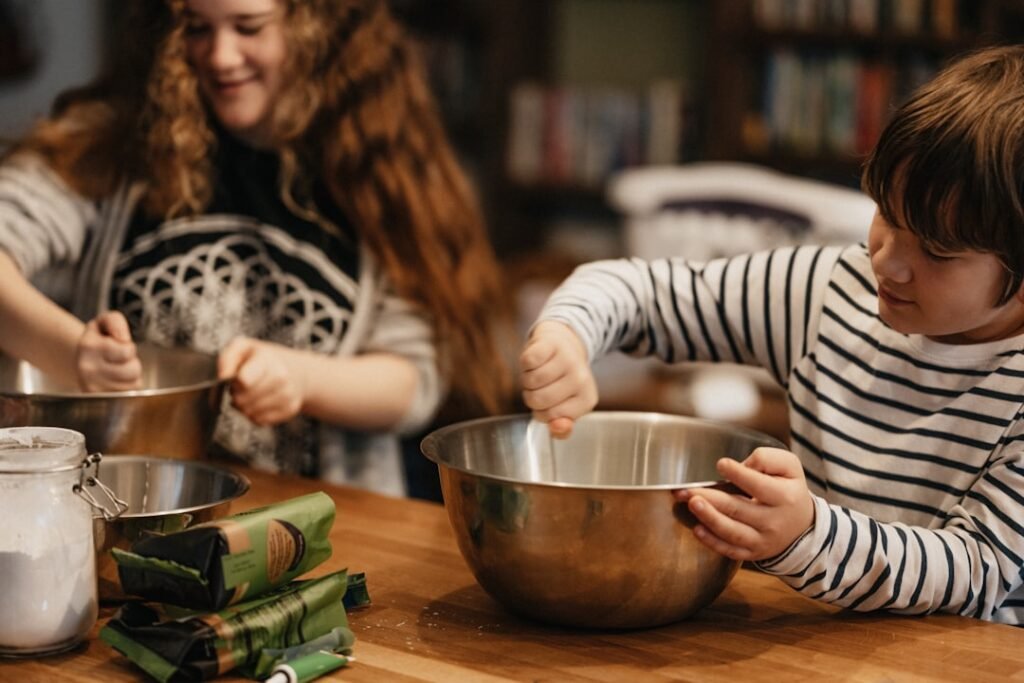
Sunday afternoons in my kitchen have a rhythm to them. The boys are usually somewhere between finishing up their schoolwork and getting into something they shouldn’t, my husband is watching football or tinkering in the garage, and I’ve got something simmering on the stove, a sheet pan in the oven, and a cutting board covered in vegetables. It’s not glamorous. But by the time Monday rolls around, I am so grateful for every single thing I prepped the day before.
If you’ve ever hit Wednesday evening completely exhausted, staring into a fridge full of random ingredients with no idea what to cook, batch cooking is about to change your life. I say that with full sincerity. For a family of six — with four hungry boys who seem to eat more every single week — having cooked food already waiting in the fridge is the difference between a calm weeknight dinner and a 6pm panic spiral that ends in drive-through nuggets and mom guilt.
This isn’t about cooking every single meal for the week on Sunday. That’s a full-time job, and none of us have that kind of time. What I’m talking about is strategic batch cooking — picking a handful of components that do the heavy lifting across multiple meals so that weeknight cooking takes 20 minutes instead of an hour.
Why Batch Cooking Works So Well for Busy Connecticut Families
Connecticut families are busy. Between school, sports, church commitments, and everything else that fills a calendar, weeknights can disappear before you even realize dinner hasn’t been started yet. Batch cooking works because it separates the labor from the eating. You do the chopping, roasting, and cooking when you have a window of time, so that when you don’t have time, the work is already done.
It also makes it dramatically easier to eat well consistently. When there’s pre-cooked ground turkey in the fridge, I can have tacos, pasta sauce, or a burrito bowl on the table in fifteen minutes. When I’ve already roasted a big tray of sweet potatoes and broccoli, those vegetables actually get eaten because they’re ready to go rather than waiting to be scrubbed and chopped after a long day.
The Academy of Nutrition and Dietetics consistently points to meal preparation as one of the most effective strategies for eating more nutritious food and reducing reliance on fast food and processed meals. That tracks completely with my own experience. When the healthy option is the easy option, that’s what gets eaten.
What To Actually Batch Cook — The Components That Matter Most
Not everything needs to be batch cooked. Focus on the things that take the longest or that get used the most frequently throughout the week. Here’s what I typically prep in my Sunday session:
- A big pot of whole grains. Brown rice, quinoa, or farro cooked in bulk stores beautifully in the fridge for four to five days. It becomes the base for bowls, a side dish, a filler for soups, or even a quick breakfast grain bowl for the kids.
- Two pounds of cooked ground protein. Ground turkey or ground beef, browned with basic seasoning. From this one cook, I can pull together tacos, pasta with meat sauce, stuffed peppers, or a quick rice bowl.
- A large batch of roasted vegetables. Whatever’s in season and affordable — right now that might mean sweet potatoes, carrots, cauliflower, or Brussels sprouts. A big sheet pan roasted at 400 degrees transforms into side dishes, additions to grain bowls, or tucked into wraps.
- Hard-boiled eggs. I make eight to ten at a time. They’re a grab-and-go protein for breakfasts, quick additions to salads, and something my boys can eat as a snack without asking me to cook anything.
- A pot of beans or lentils. Dried beans cooked from scratch are far cheaper than canned and taste better. A big pot of black beans or lentils gives me material for soups, sides, quesadillas, and more.
- Washed and cut produce. Carrots cut into sticks, bell peppers sliced, cucumbers ready to go. When healthy snacks require zero prep, they actually get eaten. This one small step has genuinely changed how much produce my boys consume.
You don’t need to make all of these every single week. Pick two or three that align with what you’re planning to cook and start there. The goal is reducing friction, not adding it.
How To Structure Your Sunday Batch Session
The key to not spending your entire Sunday in the kitchen is working in parallel rather than in sequence. While the grains are boiling, the vegetables are roasting. While the meat is browning, the eggs are cooking. You’re not standing there watching anything — you’re moving between tasks and letting the oven and stovetop do the work simultaneously.
Here’s a simple rhythm I’ve developed over years of doing this:
- Start with the longest cooking items first. Put the grains on to boil and the vegetables in the oven before you do anything else. These take the most hands-off time.
- While those cook, prep and brown your protein. Spend 10 minutes on the stovetop getting ground meat cooked and seasoned.
- Use remaining time for cold prep. Hard-boil eggs, wash and cut produce, portion out snacks into containers so the kids can grab them without making a mess.
- Cool everything properly before storing. This matters for food safety — don’t seal hot food directly into containers. Spread it out on a baking sheet to cool quickly if you’re in a hurry.
The whole session, if you’re focused, takes about 90 minutes to two hours. That’s it. And that two-hour investment buys you a week of dinners that come together in minutes rather than hours.
Get Your Kids Involved — It’s a Teaching Moment
Sunday batch cooking is genuinely one of my favorite times to work alongside my boys in the kitchen. My 15-year-old can handle almost everything — he’s gotten confident enough to manage the stovetop and knows how to check whether grains are cooked through. My 12-year-old is excellent at washing vegetables, tearing greens, and portioning things into containers. Even my 6-year-old has a job: he counts the eggs into the pot and helps arrange things on the sheet pan.
There’s something deeply satisfying about working together to prepare food that will nourish the whole family all week. We talk, we taste things, we sometimes make a mess. But we’re together, and that time matters. I think about Proverbs 31 and the picture it paints of a home that’s well-tended and a family that’s well-fed — not because of perfection, but because of faithful, consistent effort. Sunday batch cooking feels like that to me in a small, practical way.
If you’re interested in building real kitchen skills into your kids’ routines in a more intentional way, I wrote about exactly that in my post on teaching kids to cook by age — a homeschool mom’s guide to real kitchen skills that stick. Batch cooking Sunday is a perfect, low-pressure opportunity to put those skills into practice.
How Batch Cooking Connects to the Rest of the Week
The real magic of batch cooking is how the components flow across multiple meals. Let me show you what a typical week looks like in our house when Sunday prep is done:
- Monday: Ground turkey rice bowls with roasted vegetables. Assembly only — done in 15 minutes.
- Tuesday: Pasta with the remaining ground turkey, a quick tomato sauce, and a side of reheated roasted broccoli.
- Wednesday: Black bean and sweet potato quesadillas using the batch-cooked beans and leftover sweet potatoes.
- Thursday: Lentil soup with carrots and whatever vegetables need to be used up — a 20-minute dinner since the lentils are already cooked.
- Friday: Grain bowls or a clean-out-the-fridge night using whatever batch components are left.
These aren’t gourmet meals. They’re solid, nutritious dinners that my family will eat without complaint — and they come together fast because the foundation was laid on Sunday. That’s the entire point.
You can see how this connects naturally to having a reliable weekly dinner rotation. If you haven’t already built a basic rotation for your family, that’s a strategy worth exploring alongside batch cooking. The two approaches together make weeknight cooking about as stress-free as it gets for a busy household. I have a whole post on using a weekly dinner rotation to save money, reduce stress, and feed your family well that walks through exactly how to set that up.
Storing Your Batch Cooked Food the Right Way
A quick word on storage because it matters more than people realize. The USDA food safety guidelines recommend storing cooked proteins and grains in the refrigerator and using them within three to four days for best quality and safety. For items you won’t use by Thursday or Friday, freeze them in labeled bags or containers on Sunday itself.
I use glass containers with tight-fitting lids for almost everything. They’re easy to see through, stack well, go from fridge to microwave without transferring food to another dish, and they last for years. It’s an upfront investment that pays off quickly. I also label everything with a piece of masking tape and a marker — date and contents — so nobody is opening mystery containers on Thursday night wondering if something is still good.
Start Small So You Actually Stick With It
I’ll be honest: the first time you try batch cooking, keep it simple. Don’t attempt to cook everything on the list above at once. Pick two components — maybe a batch of grains and a protein — and just do those. See how much easier your week feels with even that small preparation done. Build from there as it becomes a natural part of your Sunday rhythm.
Consistency matters far more than perfection here. A batch cooking session that takes 45 minutes and produces two things is infinitely more valuable than an elaborate plan that overwhelms you and never happens. Start where you are, use what you have, and let the process grow over time.
I promise you, after a few weeks of walking into Monday with a stocked fridge, you will not want to go back. There is genuine peace in opening your refrigerator on a Tuesday evening and knowing that dinner is already halfway done. That peace — that sense of having taken care of your family before the week even started — is worth every minute of that Sunday afternoon in the kitchen.
So this Sunday, pick two things, turn on some music, call one of your kids in to help, and give batch cooking a real try. Your future self — the one standing in the kitchen on Wednesday night — will be very, very grateful.

Pingback: Healthy Family Dinners With Beef: A Real Mom's Guide
Pingback: Healthy Family Dinners With Turkey Breast
Pingback: Healthy Freezer Meals for Busy Families of Six
Pingback: Healthy Sweet Potato Dinners Your Family Will Love