
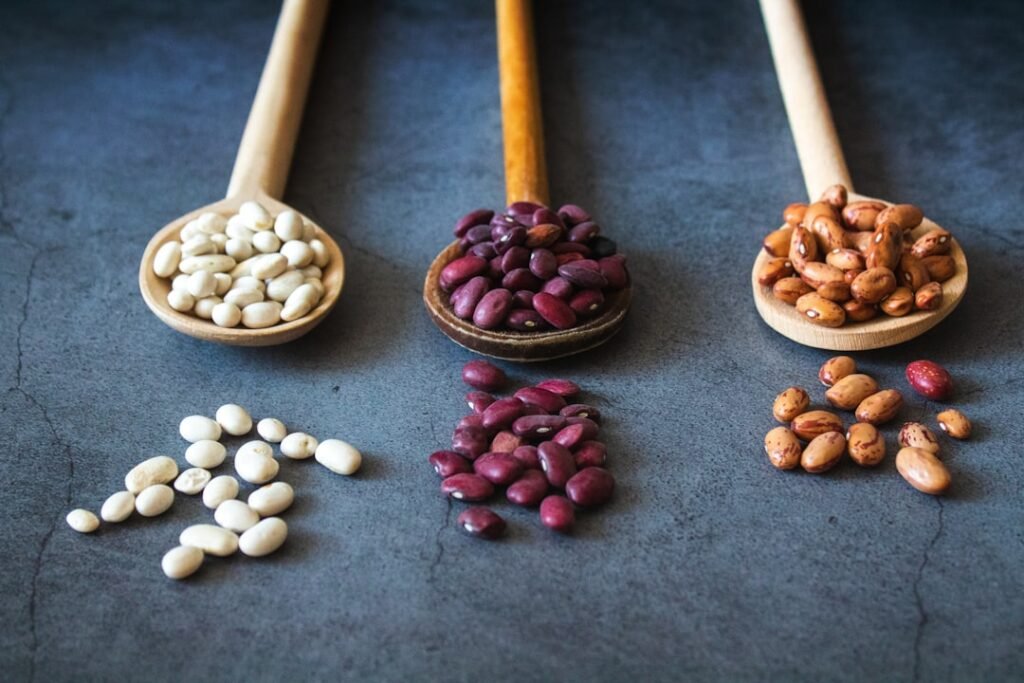
There is a moment in almost every Connecticut mom’s week where she opens the pantry, stares at a can of chickpeas, and thinks — I want to use this, but will anybody actually eat it? I have been there more times than I can count. Four hungry boys, a husband who grew up on meat-heavy meals, and a very real need to stretch the grocery budget without sacrificing nutrition. Beans and legumes have become one of my absolute best kitchen tools — and I want to show you exactly how I make them work for a family that would rather skip dinner than eat something they describe as “mushy.”
This is not about replacing every meal with lentil soup and hoping for the best. It is about learning how to cook with beans and legumes in ways that are genuinely satisfying, high in protein, and sneaky enough that even the pickiest eater at your table will clean their bowl. My 10-year-old once told me our black bean tacos were his favorite dinner of the week — and he had no idea I had swapped half the ground beef for beans. That is a win I will take every single time.
Why Beans And Legumes Deserve A Spot In Your Weekly Rotation
Let me give you the quick nutrition case, because it genuinely matters. Beans and legumes — we are talking black beans, chickpeas, lentils, kidney beans, white beans, and more — are loaded with plant-based protein, fiber, iron, and complex carbohydrates. According to the Academy of Nutrition and Dietetics, legumes are one of the most nutrient-dense and affordable protein sources available, making them an excellent choice for families trying to eat well without overspending.
For a family of six in Connecticut where grocery prices are no joke, that matters. A can of black beans at most grocery stores runs under two dollars and gives you enough protein to stretch a meat-based meal significantly further. A bag of dried lentils is even more economical. When I factor in what we spend per meal versus the nutrition we get back, beans win almost every time.
Beyond the budget, the fiber in legumes keeps growing kids fuller for longer — which means less snacking, fewer complaints before dinner, and better focus during our homeschool morning. My 12-year-old runs cross country, and I have found that meals with a good balance of complex carbs and plant protein give him much steadier energy than a heavy meat dinner the night before a race.
The Real Reason Families Avoid Beans (And How To Fix It)
Let’s be honest. Most families avoid beans for a few very real reasons: texture complaints, blandness, digestive discomfort, and the general suspicion that bean dinners are not “real food” for hungry kids. I hear this all the time, and I get it. My boys had every one of those objections in the early days.
Here is what I learned through a lot of trial and error. The texture problem is almost always a cooking problem. Mushy canned beans that haven’t been drained and rinsed well, or lentils boiled too long without seasoning, will never win over a hungry 15-year-old who just came home from football practice. But beans that are well-seasoned, properly cooked, and served inside something familiar? Completely different story.
The blandness problem is solved with bold spices and aromatics. Beans are a blank canvas. Cumin, smoked paprika, garlic, onion, chili powder, and a splash of good broth can turn a plain can of chickpeas into something that smells incredible from the next room. When my oldest walks through the door and says, “what is that smell?” — that is when I know dinner is going to be a success.
For digestive discomfort, especially when you are first adding more legumes to your family’s diet, go slowly. Start with one or two bean-based dinners per week, rinse canned beans very thoroughly, and consider starting with lentils which are generally easier to digest than larger beans.
My Favorite Ways To Use Beans In Family Dinners
I want to walk you through the methods and meals that have actually worked in my kitchen — not what looks pretty in a cookbook, but what a tired homeschool mom can actually pull off on a Tuesday night.
The Blend-In Method: This is the approach I use most often with younger kids or newly skeptical eaters. I blend or mash a portion of beans directly into a dish where they essentially disappear. A quarter cup of pureed white beans stirred into pasta sauce adds protein and creaminess without a single visible bean. Pureed black beans folded into taco meat creates a richer texture and stretches one pound of ground beef to feed six instead of four. My 6-year-old has eaten hundreds of black bean tacos at this point and does not know or care what is inside. He just knows it tastes good.
The Main Event Method: This is where beans carry the meal completely. My go-to here is a spiced lentil and vegetable stew served over rice. I season it heavily with garlic, cumin, turmeric, and canned tomatoes, let it simmer low and slow, and serve it with warm bread for dipping. Even my most skeptical boys come back for a second bowl when this is on the table, especially on a cold Connecticut evening in January.
Another favorite in the main event category is a white bean and sausage skillet. I brown a small amount of turkey sausage — just enough for the flavor — with onion and garlic, then add two cans of cannellini beans, a can of diced tomatoes, and a handful of spinach. Ready in under 30 minutes. Full of protein and iron. My husband requests this one regularly.
The Stuffed Situation: Stuffed peppers, stuffed sweet potatoes, and stuffed tacos are all great vehicles for beans because the presentation is exciting and the fillings hold up well. I do a black bean and brown rice stuffed pepper that my boys actually look forward to. You can find tips on cooking with whole grains like brown rice on this blog if you want to combine those two strategies together — it is a great combination for filling, nutritious dinners.
The Soup Solution: A big pot of bean soup is one of the most practical things I make all winter. It costs almost nothing, reheats beautifully for lunch the next day, and fills six hungry people without complaint. My standard is a simple ham and white bean soup — leftover ham bone if I have it, two cans of Great Northern beans, carrots, celery, onion, garlic, and chicken broth. Serve it with a good crusty bread and it is one of those meals where the whole table goes quiet because everyone is eating. Those quiet moments feel like a gift. Around our table, a good meal shared together is never something I take for granted.
Simple Chickpea Stir Fry Your Kids Will Actually Request
I want to give you one specific recipe that has become a genuine hit in our house — a crispy chickpea and vegetable stir fry over brown rice or noodles. This one wins over the skeptics every time because the chickpeas get crispy in the pan and feel more like a hearty protein than something mushy and bland.
- 2 cans of chickpeas, drained, rinsed, and patted dry
- 2 tablespoons olive oil
- 1 teaspoon garlic powder
- 1 teaspoon smoked paprika
- 1/2 teaspoon cumin
- Salt and pepper to taste
- 2 cups broccoli florets
- 1 red bell pepper, sliced thin
- 2 cloves garlic, minced
- 3 tablespoons low-sodium soy sauce or tamari
- 1 tablespoon honey
- 1 teaspoon sesame oil
- Cooked brown rice or noodles for serving
Heat a large skillet or wok over medium-high heat. Add one tablespoon of olive oil and spread the chickpeas in a single layer. Let them cook without stirring for three to four minutes until they start to get golden and crispy on the bottom. Add the garlic powder, smoked paprika, cumin, salt, and pepper, toss to coat, and cook another two minutes. Remove chickpeas and set aside.
In the same pan, add the remaining olive oil. Toss in the broccoli and bell pepper and stir fry for four to five minutes until just tender. Add the minced garlic and cook for one more minute. Whisk together the soy sauce, honey, and sesame oil, pour it over the vegetables, and stir to coat. Add the crispy chickpeas back in and toss everything together.
Serve over brown rice or noodles. Feeds six comfortably. My 15-year-old adds hot sauce. My 6-year-old picks out the chickpeas first and declares them his favorite part. That is exactly the reaction I am looking for.
Building Bean Dinners Into Your Weekly Routine
The easiest way to make beans a regular part of your family’s dinner rotation is to commit to one or two nights per week where legumes play a starring or supporting role. You do not have to announce it as “bean night” — just make something delicious and let the food speak for itself.
Keep your pantry stocked with a rotation of canned beans — black beans, chickpeas, kidney beans, cannellini beans, and a bag or two of red or green lentils. These are your fast weeknight proteins when the clock is running and nobody has the energy for elaborate cooking. If you are working on building a more intentional grocery routine, my post on cutting your grocery bill without cutting nutrition covers pantry stocking strategies that pair really well with a legume-forward dinner plan.
Also, do not underestimate the power of leftovers. A big pot of lentil soup or a bean and rice dish makes fantastic lunches the next day. Beans reheat extremely well and often taste even better the second day after the flavors have had more time to develop.
What The USDA Says About Legumes In A Family Diet
It is worth noting that the USDA MyPlate guidelines actually classify beans and legumes in both the vegetable group AND the protein foods group — which tells you just how nutritionally valuable they are. They recommend them as a protein source specifically because of their fiber content, which is something animal proteins cannot offer. For families trying to eat more whole foods and less processed food, leaning into legumes is one of the most impactful changes you can make.
And honestly, teaching my boys that beans are a real, satisfying, and delicious food — not a sad substitute for something better — feels like one of the more important kitchen lessons I can pass along. Food is nourishment. It is how we take care of the bodies God gave us, and how we sit down together at the end of a long day and reconnect as a family. A pot of good bean soup does all of that just as well as anything more expensive or complicated.
Start with one recipe this week. Pick the one that sounds most like something your family would enjoy, and let it be simple. The goal is not perfection — it is progress, one dinner at a time.

Pingback: Healthy Family Dinners With Eggs: A CT Mom's Guide