
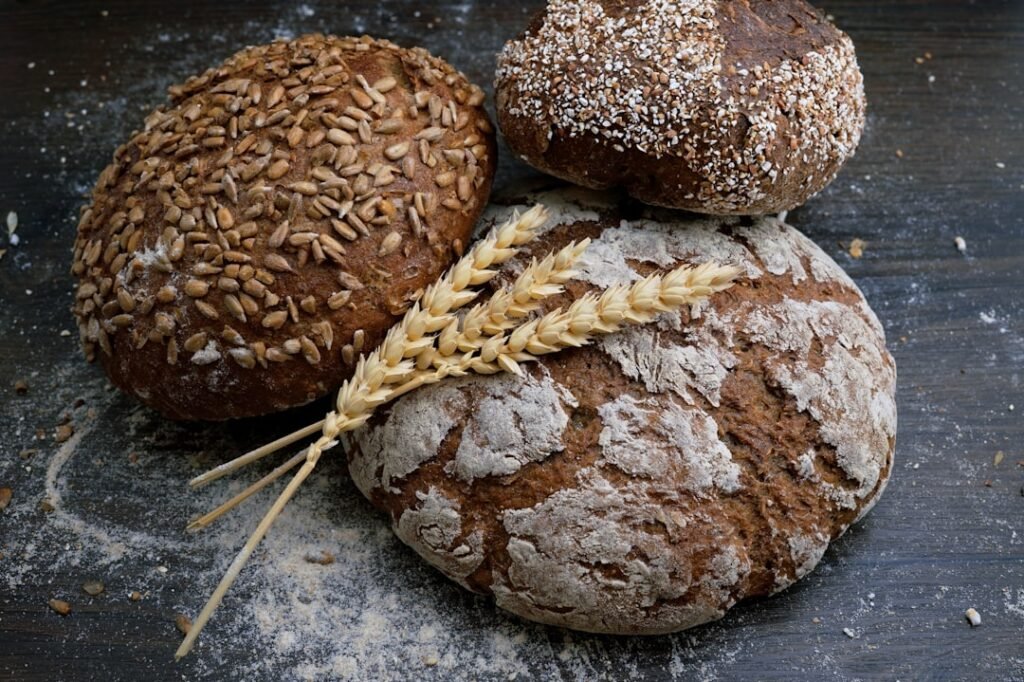
There is something that happens in my kitchen when bread is baking. It does not matter how chaotic the afternoon has been — homework arguments, someone’s cleats missing before practice, the 6-year-old absolutely convinced he is starving even though he just ate — when that smell starts drifting through the house, everyone calms down a little. My boys wander in. Someone pulls up a stool. And for a few minutes, we are just a family waiting for something good.
I did not grow up baking bread. Honestly, it intimidated me for years. I thought you needed a whole afternoon, a stand mixer, and some kind of inherited talent for it. But once I started experimenting — mostly out of frustration with what I was reading on store-bought bread labels — I realized that homemade bread does not have to be complicated, and the nutritional payoff for my family is genuinely worth the small amount of extra effort it takes.
If you have been buying sandwich bread, dinner rolls, or even those brown-and-serve rolls from the grocery store, I want to gently encourage you to look at the ingredient list sometime. Many of them contain high-fructose corn syrup, multiple preservatives, dough conditioners, and a list of additives that takes up four lines of tiny print. You are not wrong to want something better for your kids. And the good news is — you can absolutely make it happen on a real Connecticut family schedule.
Why Store-Bought Bread Is Worth Reconsidering
Let me be clear — I am not here to make anyone feel guilty about buying bread from the store. We are all doing our best, and there are weeks when a loaf of bread from the shelf is the only realistic option. But if you are trying to gradually clean up your family’s eating, bread is actually one of the easiest places to start making a real difference.
Most commercial breads — even ones labeled “wheat” or “multigrain” — are made with refined flour, added sugars, and preservatives that extend shelf life at the expense of nutrition. According to the Harvard T.H. Chan School of Public Health, whole grains significantly reduce the risk of heart disease, type 2 diabetes, and digestive issues — but many store-bought “whole wheat” breads contain only a small fraction of actual whole grain flour.
When you bake at home, you control every single ingredient. You can use white whole wheat flour, add flaxseed or oats for extra fiber, cut the sugar way down, and skip every preservative on that label. For a family of six eating sandwiches, dinner rolls, and toast several times a week, that adds up to a meaningful nutritional upgrade.
Starting Simple — The Beginner-Friendly Sandwich Loaf
When I first started baking our own bread, I needed something that would work even on a busy homeschool day. I was not looking for an artisan sourdough project. I needed a reliable, soft sandwich loaf that my boys would actually eat without complaints.
Here is the basic formula I keep coming back to:
- 3 cups white whole wheat flour (King Arthur makes a great one and you can find it at most Connecticut grocery stores)
- 1 cup all-purpose flour (this keeps the texture soft enough for the kids)
- 2 1/4 teaspoons active dry yeast (one standard packet)
- 1 teaspoon salt
- 1 tablespoon honey
- 2 tablespoons olive oil
- 1 1/4 cups warm water
Mix your dry ingredients, combine your warm water, honey, and yeast and let it bloom for five minutes, then bring everything together. Knead for about eight minutes by hand — or less if you have a stand mixer — let it rise for an hour, shape it, let it rise again for 30 minutes, and bake at 375°F for about 30 minutes. That is it. The active hands-on time is honestly about 20 minutes.
My 12-year-old has started handling the kneading completely on his own. He takes real pride in it, and I love that he is learning what dough is supposed to feel like — smooth, slightly tacky, pulling away from the bowl cleanly. That kind of tactile kitchen knowledge is something he will carry for the rest of his life, which is exactly the kind of skill-building I talked about in my post on teaching kids to cook by age in our homeschool kitchen.
Quick Dinner Rolls That Come Together Fast
Dinner rolls were actually what finally convinced my skeptical husband that homemade bread was worth the effort. I made them for the first time on a Sunday after church, alongside a big pot of soup, and he looked at me like I had done something extraordinary. I had not. They took about 30 minutes of active work and another hour of rising time.
The key to fast dinner rolls is using slightly more yeast and a warmer rising environment. I preheat my oven to 200°F, then turn it off and put my covered dough inside to rise. It cuts the rise time significantly, which matters on a Sunday afternoon when everyone is hungry and circling the kitchen.
For added nutrition in dinner rolls, I sometimes mix in:
- Two tablespoons of ground flaxseed (completely invisible, nobody notices)
- A quarter cup of rolled oats blended smooth (adds fiber without changing texture much)
- A tablespoon of wheat germ stirred into the flour
- Dried herbs like rosemary or garlic powder for flavor variety
These small additions do not change the taste in any way my boys would protest, but they meaningfully increase the fiber and nutrient content of something my family is already eating every single week.
Whole Grain Flatbreads — The Weeknight Secret Weapon
On nights when I have not planned ahead for a loaf or rolls, flatbreads are my answer. They require zero rising time, take about 15 minutes start to finish, and my kids love them. We use them for homemade pizza night, as wraps for leftover chicken, or just torn and dipped into soup or hummus.
My basic whole grain flatbread uses equal parts whole wheat flour and all-purpose flour, a little olive oil, salt, and water. You mix it together, divide into balls, roll them thin, and cook them in a dry cast iron skillet for about two minutes per side. Done. No yeast, no rising, no waiting.
This is also the bread project I let my 6-year-old help with most. He can roll the dough with supervision, and he thinks cooking something in a skillet with no oil sizzling is just about the most exciting thing that has ever happened. Getting kids involved in making their own food — even at the simplest level — changes how willing they are to actually eat it.
Smart Flour Swaps To Boost Nutrition Without Losing Your Family
One of the most common mistakes I see when parents try to switch to healthier homemade bread is going all-in on 100 percent whole wheat flour right away. I understand the impulse. But if your kids are used to soft white sandwich bread, a dense, dark whole wheat loaf is going to feel like a punishment, and you will be back to the store-bought stuff by Thursday.
Here is the approach that actually worked for my family:
- Start with a 50/50 blend — half all-purpose, half white whole wheat. White whole wheat is lighter in flavor and texture than regular whole wheat but still packs the whole grain nutrition.
- Increase the whole wheat gradually — after a few weeks at 50/50, go to 60/40, then 70/30. My family never noticed the change because it happened slowly.
- Use white whole wheat flour, not regular whole wheat — this single swap makes the biggest difference in texture and acceptance for kids.
- Add a little fat — olive oil or a tablespoon of butter makes whole grain bread noticeably softer and more appealing.
This is the same gradual swap approach I use for reducing sugar in other things my family eats. When the change is slow and steady, nobody revolts. The Academy of Nutrition and Dietetics recommends making at least half your grains whole grains — and with homemade bread, you can get there without a single dinner table argument.
Making Bread Fit Into A Real Busy Schedule
I know what you are thinking. This sounds great, but when? Between homeschooling, sports, church commitments, and just keeping this house running, where does bread baking fit?
Here is how I make it work without treating it like a project:
- Batch bake on the weekend — I make two loaves on Saturday morning while the boys are doing their independent reading. Both go in the oven at the same time, one for the week and one for the freezer.
- Use the freezer aggressively — homemade bread freezes beautifully. Slice the second loaf before freezing and you can pull out individual slices as needed.
- Make rolls on Sunday — Sunday dinner almost always includes rolls in our house. It has become part of our family rhythm, something the kids expect and look forward to.
- Let the dough do the work overnight — a no-knead refrigerator bread dough takes five minutes to mix on Sunday night and is ready to bake Monday morning with almost no effort.
This connects well with the batch cooking strategies I covered in my post on using weekend batch cooking to make your whole week easier — bread is one of the best things to prep ahead because it holds well and gets used at almost every single meal.
What Homemade Bread Costs Compared To The Store
This is where homemade bread becomes genuinely exciting from a budget perspective. A 5-pound bag of white whole wheat flour at most Connecticut grocery stores runs between four and five dollars and yields roughly six standard loaves of bread. That works out to well under a dollar per loaf in flour costs alone.
Even adding yeast, a little oil, and honey, you are looking at a cost of somewhere between $1.00 and $1.50 per loaf for a quality whole grain bread that would run you four or five dollars at the store — if you could even find one with a clean ingredient list at that price. For a family that goes through two or three loaves a week, that savings adds up meaningfully over a month.
For our family of six in Connecticut, homemade bread saves us somewhere between $20 and $30 a month depending on the week, and that is without counting the rolls and flatbreads. Every dollar saved on staples like bread is a dollar I can put toward better quality produce or protein.
The Table Is Worth Building Around
I want to close with something that goes a little beyond the practical. There is a reason bread has been central to gatherings and meals throughout human history — and throughout Scripture. Breaking bread together is not just a phrase. It is something that actually happens when you sit down with people you love and share food you made with your own hands.
When my boys tear into a warm roll I just pulled from the oven, or when my 15-year-old asks if he can have another slice of the loaf he helped knead, something small and good is happening. We are building a table worth coming back to. We are making food that means something beyond just filling stomachs.
Homemade bread is one of the simplest ways I know to do that — and it costs less, feeds more, and nourishes better than almost anything I could buy. If you have never tried it, start with the sandwich loaf or the flatbreads. Keep it simple. Let your kids help even when it is messy. And enjoy what happens when something that good comes out of your own kitchen.
