
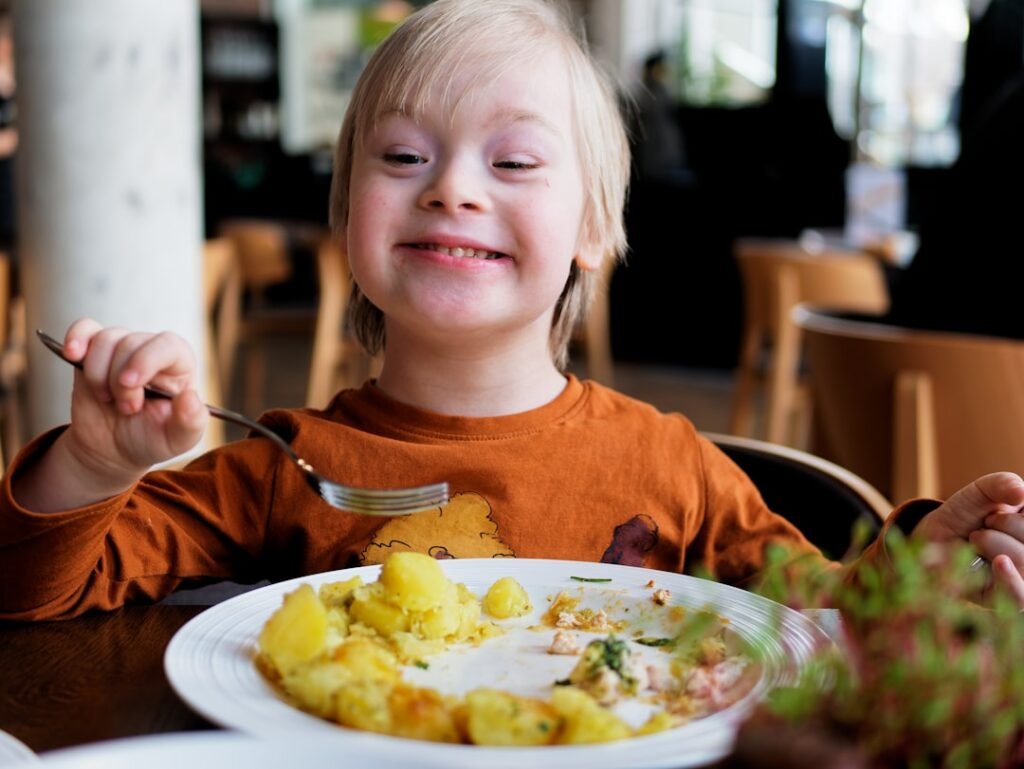
If you have put a beautiful plate of roasted broccoli on the dinner table only to be met with groaning, dramatic gagging sounds, and a 10-year-old who suddenly claims he has never liked broccoli in his entire life — you are not alone. Getting kids to eat vegetables at dinner is one of the most universally exhausting battles of family life, and after years of feeding four boys in our Connecticut home, I have learned that fighting that battle head-on almost never works.
What does work? Strategy. Patience. A little creativity. And honestly, a willingness to let go of the idea that vegetables always have to look like vegetables to count. I have fed a family of six through every phase of picky eating imaginable, and I want to share what has actually moved the needle in our house — not just in theory, but at our real dinner table on a real Tuesday night when everyone is tired and hungry and nobody is in the mood for negotiating.
This is not about tricking your kids or hiding vegetables in every dish forever. It is about gradually shifting what your family eats, building real food familiarity, and getting your kids to actually enjoy — or at minimum, accept — more vegetables as a normal part of dinner. Here is what has worked for us.
Start With How You Serve Vegetables, Not Which Ones You Choose
One of the biggest shifts I made early on was realizing that the vegetable itself was rarely the problem. The problem was how I was cooking it. Steamed zucchini with no seasoning? My boys would rather go hungry. But zucchini roasted in a little olive oil with garlic, salt, and a squeeze of lemon until the edges get slightly caramelized? My 12-year-old eats two helpings without thinking about it.
Roasting is genuinely transformative. It concentrates flavors, adds natural sweetness, and creates texture that even skeptical kids respond to. The same goes for sautéing vegetables with good seasoning or folding them into sauces where they absorb the flavors around them. The method matters as much as the vegetable itself.
Here are the preparation methods that have consistently worked best in our house:
- Roasting at high heat (400–425°F) with olive oil, salt, and garlic — works beautifully for broccoli, carrots, Brussels sprouts, cauliflower, and sweet potatoes
- Sautéing in butter or olive oil with a pinch of salt and garlic — great for green beans, spinach, zucchini, and mushrooms
- Adding to sauces and soups — blending cooked carrots or butternut squash into tomato sauce adds nutrition without changing the flavor dramatically
- Serving with a dip — raw carrots, celery, and cucumber with hummus or a simple Greek yogurt ranch dip disappears faster than almost anything else I put on the table
Give Kids A Small Amount Of Control At The Table
This one felt counterintuitive to me at first, but research consistently backs it up — and so does my own experience. When kids feel like they have some say in what goes on their plate, they are more likely to actually eat it. I am not talking about letting a six-year-old run the dinner menu. I am talking about small, manageable choices that give them a sense of ownership.
I will often put out two vegetables at dinner and let my boys choose which one they want more of, or ask them to help pick between two options at the store. My 6-year-old is far more likely to eat snap peas at dinner if he was the one who picked them out of the bin at the market. My 15-year-old has started volunteering to help me prep vegetables on weeknights — and kids almost always eat what they helped make.
If you are already working on building those kitchen skills, you might find my post on teaching kids to cook by age helpful — getting them involved in the kitchen from a young age really does change how they relate to food at the table.
Use The One-Bite Rule Without Turning It Into A Power Struggle
We have a simple rule in our house: you have to try one real bite before you decide you do not like something. Not a microscopic taste — a real bite. And then if you genuinely do not enjoy it, that is okay. But the one bite has to happen.
The key to making this work without turning every dinner into a standoff is to enforce it calmly and consistently, without drama or reward. The bite is just expected — the same way putting your dish in the sink is expected. When I stopped making a big production out of it, my boys stopped making a big production out of refusing. It became less of an event and more of a normal part of eating together.
The American Academy of Pediatrics notes that kids may need to be exposed to a new food 10 to 15 times before accepting it — so one dinner’s refusal is never the final answer. Keep serving it. Keep asking for the one bite. It works over time.
Make Vegetables Part Of The Meal, Not A Side Show
When vegetables are treated like an afterthought — something sitting sadly in a bowl beside the “real” food — that is exactly how kids will treat them. But when they are built into the main dish, they become part of what the meal is. My boys eat far more vegetables when they are incorporated into the dishes they already love.
Some of my favorite ways to do this with a hungry family of six:
- Stir fry nights — everything goes into one pan together and the sauce ties it all together, so separating out the vegetables feels less possible
- Loaded grain bowls — when everyone builds their own bowl, they have agency and usually pile on more than you expect
- Sheet pan dinners — protein and vegetables roast together on the same pan, so everything is seasoned consistently and tastes like part of the same meal
- Soups and stews — this is where I can get the most vegetables into my boys without any resistance, especially on a cold Connecticut winter night
- Egg dishes like frittatas or scrambled eggs — spinach, peppers, and onions disappear completely when cooked into eggs
Do Not Make A Separate Meal — But Do Offer A Safe Food
I want to be honest about something that took me a while to figure out. There is a difference between being flexible and being a short-order cook. I do not make separate meals for my boys based on what they are willing to eat that night. But I do make sure there is always at least one thing on the table that each of them genuinely likes — whether that is the protein, the grain, or a particular vegetable I know they accept.
This is sometimes called the Division of Responsibility in feeding — a framework developed by family feeding therapist Ellyn Satter that has genuinely helped a lot of parents. The idea is that you decide what is served and when, and your child decides whether and how much to eat. That boundary alone takes so much pressure off the dinner table for everyone.
When my boys know there is something on the table they can eat, they are less anxious about the unfamiliar things — and less anxious kids are more willing to try new things. It sounds simple, but it changes the energy at dinner completely.
Let Vegetables Show Up At Snack Time Too
If vegetables only appear at dinner when everyone is already tired and hungry and defensive, that is hard ground for them to grow in. But when vegetables are just normal snack food in your house — something that shows up in the afternoon alongside other options — kids start relating to them differently.
In our house, I keep a small container of washed and prepped raw vegetables in the fridge at all times. Carrot sticks, cucumber slices, celery, snap peas — whatever is in season or on sale. When my boys come home from co-op or finish their schoolwork and are looking for something to eat, it is right there and easy. Hungry kids eat what is available. Healthy after-school snacks do not have to be elaborate — they just have to be ready.
Talk About Food Without Attaching Emotion To It
I have worked hard in our home to talk about food in a way that is matter-of-fact rather than emotionally loaded. We do not call things “good food” and “bad food” — we talk about what food does for our bodies. Vegetables help our eyes see better, help our muscles recover after sports, help us think clearly during school. My boys respond to that kind of practical framing much better than they respond to being told they have to eat something because it is healthy.
The USDA MyPlate guidelines recommend that vegetables make up roughly half of every plate — which feels like a lot when you are dealing with four boys who would happily eat only chicken and rice. But framing it as “your body needs this to do the things you want to do” lands differently than “eat your vegetables because I said so.”
We also talk about food as a gift and a blessing at our table. Giving thanks before meals is a grounding moment in our day, and it naturally shifts the conversation toward gratitude for what is in front of us rather than complaints about it. That simple practice has done more for our dinner table atmosphere than almost any strategy I have ever tried.
Be Patient — And Keep Showing Up
I will not pretend that every dinner in our house is a vegetable success story. There are still nights when my 6-year-old dissolves into tears over a piece of roasted sweet potato, and nights when even my usually adventurous 15-year-old pushes something to the side. That is real life with real kids.
But the long game matters more than any single dinner. Kids who grow up in homes where vegetables are present, normal, talked about positively, and prepared well — those kids grow into adults who eat vegetables. You are not just feeding them tonight. You are building the foundation of how they think about food for the rest of their lives. That is worth every skipped bite and every dramatic sigh at the table.
Keep roasting. Keep serving. Keep asking for that one real bite. You are doing better than you think.
