
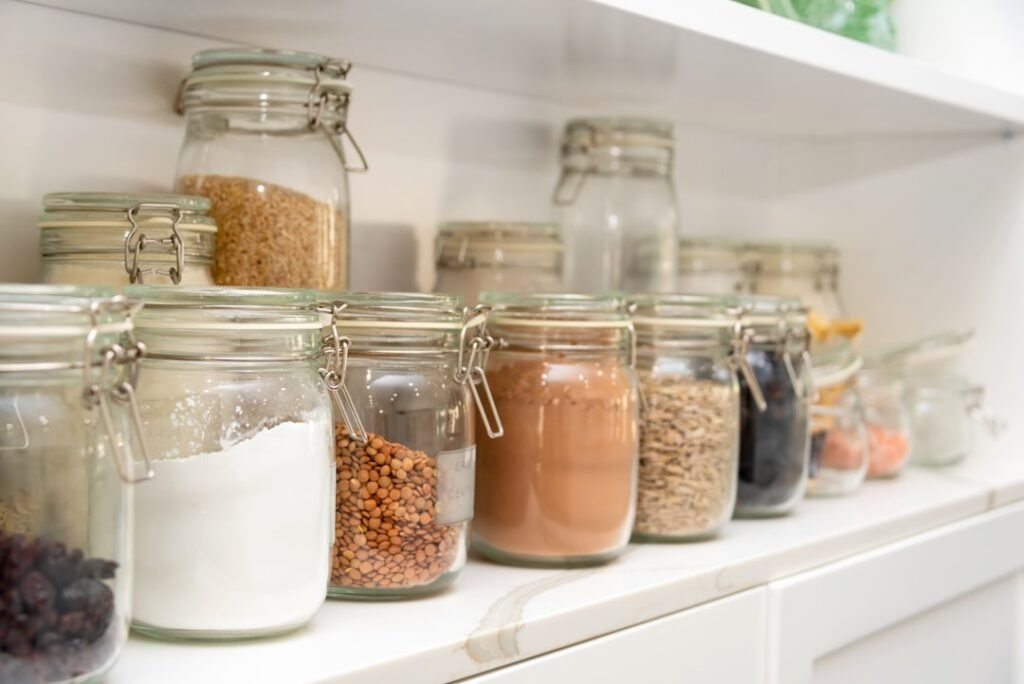
There have been plenty of evenings in our house where five o’clock rolls around, everyone is hungry, and I open the refrigerator only to feel completely stuck. Not because we don’t have food — but because nothing feels like it goes together. Sound familiar? That used to happen to me more often than I’d like to admit, until I stopped thinking about dinner as something I figured out each night and started thinking about it as something my pantry made possible every night.
Building a healthy, well-stocked pantry changed the way I cook for my family of six more than any single recipe ever has. When I know what I have on hand — and when those ingredients are actually good for my boys — dinner stops feeling like a daily crisis and starts feeling like something I can genuinely handle. Even on the hard homeschool days when we didn’t close the last book until four-thirty and someone needs to be at youth group by six.
This is not about having a perfect Pinterest pantry with matching glass jars and chalkboard labels. This is about having the right things in your kitchen so that a wholesome meal is always within reach — whether you’re cooking for a crowd on a Tuesday or pulling something together on a shoestring at the end of a long week. Let me walk you through exactly how I do it for our family here in Connecticut.
Why Your Pantry Is the Foundation of Everything
Before I started being intentional about what I kept stocked, I was at the grocery store almost every other day. I’d run out of something basic, improvise poorly, or end up relying on processed convenience foods because I didn’t have the building blocks to make anything real. Once I started treating my pantry as a system instead of just a shelf, everything shifted.
A well-built pantry means you always have a starting point. It means when your 10-year-old says he’s starving after a long afternoon of math, you can pull together something nutritious fast. It means when your grocery haul is lighter than planned because Connecticut produce prices spiked that week, you can still put a real dinner on the table. It’s your safety net, your creative toolkit, and your budget’s best friend all at once.
The USDA MyPlate nutrition guidelines emphasize building meals around whole grains, lean proteins, fruits, vegetables, and dairy — and a smart pantry makes following that framework automatic rather than effortful. When those categories are already covered in your pantry, you’re just filling in the fresh pieces each week.
The Whole Grains Your Family Actually Needs
Whole grains are the backbone of so many of our dinners and lunches, and they store beautifully for weeks or even months. I keep a core rotation of grains that I know my boys will eat without complaint — and that’s the key. There’s no point stocking a grain nobody will touch.
- Brown rice — the workhorse of our kitchen. It goes under stir-fry, into burrito bowls, alongside beans, or mixed into soups to bulk them up.
- Quinoa — high in protein, quick to cook, and surprisingly well-received by my older boys when it’s seasoned well and mixed with something they already like.
- Rolled oats — not just for breakfast. We use oats in homemade granola, baked oatmeal, muffins, and energy bites for after-school snacks.
- Whole wheat pasta — this is one of the easiest swaps you can make. My 6-year-old doesn’t even know it’s different from regular pasta when it’s covered in a good sauce.
- Farro — a little heartier and nuttier, and it’s excellent in fall soups and grain bowls. My older boys have really come around to this one.
If you want to go deeper on cooking with these grains for a hungry family, I covered a lot of what works for us in my post on making healthy whole grain dinners your hungry family will actually finish. There’s real-life strategy in there, not just theory.
Proteins That Keep Without Taking Over Your Freezer
Protein is where a lot of families fall short in their pantry planning because they assume protein means fresh meat — and fresh meat doesn’t live in your pantry. But shelf-stable and freezer-friendly proteins are some of the most powerful tools you have for feeding a hungry family well.
- Canned beans — black beans, chickpeas, kidney beans, and cannellini beans are all staples in our kitchen. They’re cheap, protein-rich, and incredibly versatile. I keep at least six cans of various beans on hand at all times.
- Canned tuna and salmon — easily overlooked, but genuinely useful. Tuna melts, salmon patties, pasta with tuna — my boys eat all of it.
- Lentils — red and green. They cook faster than most legumes, cost almost nothing, and work beautifully in soups, stews, and even taco fillings.
- Natural nut butters — peanut butter and almond butter are both protein sources and snack heroes. I always have at least two jars.
- Eggs — technically refrigerator, not pantry, but eggs deserve a mention as one of the most affordable and nutritious proteins you can stock. We go through two dozen a week easily between six people and all the baking I do.
- Frozen chicken breasts and ground turkey — kept in the freezer, thawed the night before when needed. These are the workhorses of our weeknight dinners.
The Academy of Nutrition and Dietetics consistently highlights legumes as one of the most underutilized protein sources for families — they’re high in fiber, filling, and cost a fraction of what meat does per serving. I’ve learned to lean on them heavily and my family genuinely doesn’t miss meat when beans and lentils are cooked well.
Canned and Jarred Goods That Do the Heavy Lifting
This category is where your pantry really earns its keep. These are the ingredients that transform your proteins and grains into actual meals.
- Diced and crushed tomatoes — for pasta sauces, chili, soups, shakshuka, and anything else that needs a tomato base. I buy these by the case at BJ’s Wholesale when they go on sale.
- Coconut milk — full-fat, for curries and creamy soups. A can of coconut milk, some lentils, canned tomatoes, and spices makes one of our favorite Thursday night dinners.
- Chicken and vegetable broth — low-sodium versions are always in the cabinet. Broth is the difference between a flat soup and a flavorful one.
- Tomato paste — a small can punches way above its weight in flavor. I add a spoonful to almost any savory dish that needs depth.
- Canned corn and green chiles — quick additions that add texture and flavor without any prep work. My boys love both.
The Oils, Acids, and Condiments That Make Food Taste Good
Healthy food gets a bad reputation for being bland, and honestly, a lot of that comes down to what’s missing in the pantry. The right fats, acids, and flavor builders make wholesome ingredients taste genuinely good — and that’s what gets kids to actually eat what’s in front of them.
- Extra virgin olive oil — for sautéing, roasting, and dressings. This is the oil we use most in our kitchen.
- Apple cider vinegar and red wine vinegar — for dressings, quick pickles, and brightening up anything that tastes flat.
- Low-sodium soy sauce or tamari — essential for stir-fry nights and grain bowls.
- Dijon mustard — mixed into dressings and sauces, it adds a sharp, tangy depth that pulls everything together.
- Hot sauce — my 15-year-old puts this on everything, and honestly, it’s a great way to add flavor without adding anything you need to worry about nutritionally.
Spices and Herbs That Turn Simple Ingredients Into Real Meals
I cannot stress this enough — your spice cabinet is where boring meals become ones your family asks for again. You do not need a hundred spices. You need the right ones, used confidently.
- Garlic powder and onion powder
- Smoked paprika and regular paprika
- Cumin and chili powder
- Dried oregano, thyme, and basil
- Cinnamon and nutmeg (for oatmeal, baked goods, and warming fall soups)
- Red pepper flakes
- Turmeric
- Kosher salt and whole black peppercorns with a grinder
With these spices, you can make Mexican-inspired dishes, Italian-style pasta sauces, Indian-spiced lentils, hearty American chili, and Mediterranean grain bowls — all from the same pantry of grains, beans, and canned goods. That variety is what keeps my boys from getting bored.
The Freezer Section of Your Pantry
Your freezer is an extension of your pantry, and treating it that way opens up so many more options. I keep these frozen staples almost always on hand:
- Frozen spinach and broccoli — just as nutritious as fresh and far more forgiving. I add frozen spinach to soups, pasta, and eggs without anyone noticing.
- Frozen edamame — high protein, easy snack, great in rice bowls and stir-fry.
- Frozen berries — for smoothies, oatmeal toppings, and the occasional healthy dessert.
- Frozen corn and peas — quick sides and mix-ins for dozens of dishes.
- Frozen whole grain waffles or homemade muffins — batch-baked on weekends and frozen for fast school-morning breakfasts.
How to Build Your Pantry Without Blowing Your Budget
I know what some of you are thinking — this sounds like a lot of upfront spending. And you’re right that building a pantry from scratch takes some initial investment. But here’s the approach that worked for me: I didn’t do it all at once. I added five to ten pantry staples each grocery trip over the course of about a month, prioritizing the items that would give me the most flexibility first (canned beans, whole grains, tomatoes, broth).
Connecticut families have some real advantages here. Places like Aldi, BJ’s Wholesale, and Market 32 often have great prices on pantry staples, and buying store brands of canned goods and dried grains costs almost nothing compared to name brands. I also stock up when staples go on sale — if canned tomatoes are on sale, I grab a dozen cans without hesitation because I know we’ll use every single one.
Once your pantry is built, your weekly grocery haul shrinks significantly because you’re only buying fresh produce, dairy, and whatever fresh protein you need that week. The pantry fills in the rest. Our grocery bill dropped noticeably once I committed to this approach, and we actually eat better because of it.
The Sunday Reset That Keeps It All Working
Every Sunday after church, I do a quick five-minute pantry check before I make my grocery list. I scan what’s running low, note what I used most that week, and make sure the things we rely on most are still there. It takes almost no time and it’s the single habit that keeps our kitchen running smoothly all week.
I also use this moment to think about the week ahead — what nights are busiest, what my boys have going on, and what dinners will fit the schedule. A stocked pantry means I can plan flexible meals instead of rigid ones. If my 12-year-old’s baseball practice runs late on Wednesday, I know I can pivot to something fast without scrambling because the ingredients are already there.
Our family table is one of the things I hold most dear. It’s where we pray together, where we laugh, where we talk about what God is doing in our lives. Making sure the food on that table is nourishing and real is part of how I care for my family — and a well-stocked pantry makes that possible even on the hardest days.
Start where you are. Add five things this week. Build from there. You don’t need a perfect pantry overnight — you just need to keep moving toward one, and your family’s dinners will get better with every step you take in that direction.
