
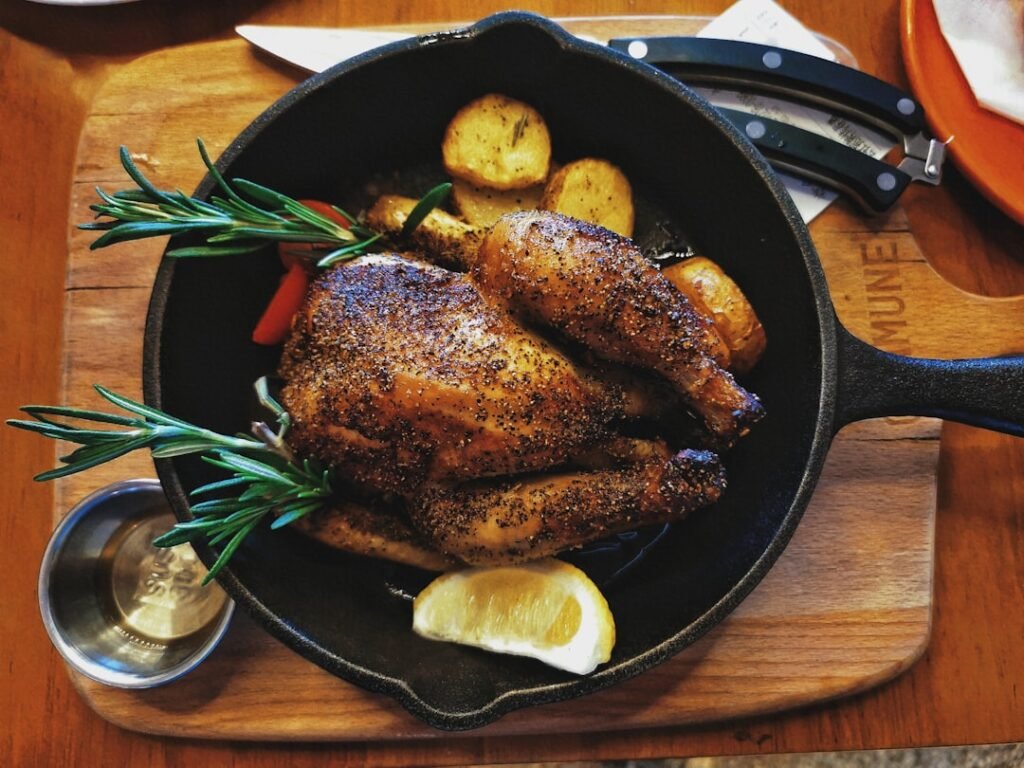
There is one item at the grocery store that I consider a legitimate lifesaver on a busy Tuesday night, and it costs somewhere between five and eight dollars at most Connecticut grocery stores. I am talking about the rotisserie chicken — already cooked, already seasoned, sitting warm under those heat lamps near the deli section. I used to walk right past it because I thought cooking from scratch was always the better choice. And then I had four boys staring at me from the kitchen while I was still in my coat, homework papers were everywhere, and dinner had not even started. That chicken changed everything.
What I have learned after years of feeding a family of six is that working smart and working hard are not opposites. Buying a rotisserie chicken is not cutting corners — it is building a foundation. One bird, handled the right way, can stretch into three completely different meals across the week without anyone at your table feeling like they are eating the same thing twice. And when you factor in the nutrition you are packing in and the money you are saving compared to takeout, it is one of the best moves you can make as a family cook.
This post is going to walk you through exactly how I do it — from the moment I get that chicken home to the final bowl of soup on Thursday night.
Why Rotisserie Chicken Works So Well For Busy Families
Let me give you the practical case first. A rotisserie chicken typically weighs between two and three pounds once you pull it off the bone, which means you are working with a solid amount of protein for very little effort. For a family like mine — two adults and four boys ranging from six to fifteen years old — that translates to a first dinner, plenty of leftover meat for a second meal, and enough scraps and bones to make a real, nourishing broth for a third.
From a nutrition standpoint, rotisserie chicken is genuinely a strong choice. Chicken is an excellent source of lean protein, B vitamins, and selenium. The skin adds some fat, which I do not stress about — healthy fats have a place in a family diet. If sodium is a concern for your family, it is worth checking the label, since some store-seasoned birds run higher in salt. The USDA’s nutrition guidance on protein foods is a helpful reference if you want to understand just how much protein your family actually needs at different ages — something I think about a lot with four growing boys.
The other reason this works so well is flexibility. Shredded chicken disappears into almost any recipe. It takes on the flavors around it. My pickiest eater does not even know he is eating the same chicken from Monday when it shows up in a taco on Wednesday.
Meal One: Simple Rotisserie Chicken Plates With Roasted Vegetables
The night you bring the chicken home is the easiest dinner you will make all week. I do not try to get creative on this meal — the chicken does the work.
Pull the chicken apart at the table or right before serving. I usually slice the breast meat for my husband and older boys, and I shred a bit extra to set aside in a container in the fridge immediately. This is important — do not wait until after dinner to separate what you plan to use later. It disappears fast when four boys are eating.
While the chicken was still on the counter warming up from the store, I throw whatever vegetables I have on hand onto a sheet pan with olive oil, salt, pepper, and garlic powder. Broccoli, sweet potatoes, carrots, zucchini — it all works. Roast at 400 degrees for about 25 minutes and you have a complete, colorful plate with almost no active cooking time from you.
Add a simple starch if you need the volume — brown rice, a warm whole grain roll, or even a quick baked potato. The meal feels hearty and satisfying, and you spent maybe fifteen minutes of actual effort.
Meal Two: Shredded Chicken Tacos Or Rice Bowls
By midweek, I pull out that container of shredded chicken from the fridge and give it a completely new flavor profile. This is where the transformation happens and where even my skeptical twelve-year-old gets excited about dinner again.
For tacos, I warm the shredded chicken in a skillet with a little olive oil, cumin, chili powder, garlic powder, a pinch of smoked paprika, and a splash of chicken broth to keep it moist. Five minutes and it smells like something you ordered at a restaurant. We pile it into corn or whole wheat tortillas and load the toppings bar — shredded cabbage, salsa, avocado slices, a little plain Greek yogurt instead of sour cream, and fresh lime.
My boys love a toppings bar because it gives them ownership over their plate. My six-year-old will eat vegetables he would normally push away when he gets to be the one putting them on himself. That is one of those small dinner table wins that I hold onto.
For a rice bowl version, the same seasoned chicken goes over brown rice with black beans, roasted corn, diced tomatoes, and a drizzle of lime-cilantro dressing. It is filling, protein-rich, and takes less than twenty minutes start to finish because the chicken is already cooked.
If you have been working on building a well-stocked pantry, this is where that investment pays off. Having cumin, smoked paprika, and chili powder on hand at all times means you can pull off a full-flavored meal without a special grocery run. I wrote about exactly how I stock our pantry in my guide to building a healthy family pantry from scratch — it is one of my most useful posts for getting to this kind of easy weeknight cooking.
Meal Three: Homemade Chicken Broth And A Nourishing Soup
This is the part that feels the most like stewardship to me — taking what is left of that chicken carcass and turning it into something genuinely nourishing. I do not throw away the bones. I never have, once I learned what they could become.
After both meals, I have the chicken carcass, any remaining skin, and sometimes a few bits of meat that nobody got to. I put all of it in my largest stockpot or slow cooker, cover it with cold water, and add a rough-chopped onion, two stalks of celery, two carrots, a few garlic cloves, a bay leaf, salt, and a splash of apple cider vinegar. The vinegar helps pull minerals from the bones, which is one of those simple nutrition tricks that costs nothing.
If I use the slow cooker, I let it go on low for eight to ten hours overnight. If I use the stovetop, I simmer it low for two to three hours in the afternoon. The result is a rich, golden broth that fills the kitchen with the best smell.
Strain it, let it cool, and you have the base for a simple chicken noodle soup, a chicken and rice soup, or a white bean and chicken soup. I usually make whichever one sounds best based on what I have in the pantry. A pot of soup made from bones and vegetable scraps costs almost nothing extra and serves our whole family with leftovers for the next day’s lunch.
According to the Academy of Nutrition and Dietetics, homemade bone broth provides collagen, amino acids, and minerals that support gut and joint health — which is a meaningful bonus when you were already planning to throw those bones away.
What To Do With The Skin And Drippings
I know not everyone thinks about this, but the drippings inside the rotisserie chicken container are flavor gold. I pour them into a small jar and keep them in the fridge. A spoonful goes into the skillet when I am making the taco filling, or I stir it into the soup for extra depth. It is free, it is flavorful, and it keeps for several days refrigerated.
As for the skin — I leave a little on the chicken for that first night because it adds flavor and the boys love it. But when I am shredding meat for the second meal, I remove most of it to keep the taco or bowl filling from getting greasy. No waste, just choices that make sense for each meal.
Practical Tips For Making This System Work Every Week
- Shred before you sit down to eat. Pull that extra portion while the chicken is still warm. It shreds more easily and you will not regret having it ready in the fridge.
- Use a sheet pan for the first night. Vegetables can roast while you pull the chicken apart. One pan, one oven, minimal dishes.
- Keep a running list of your pantry seasonings. The magic of meal two depends on having the right spices. A bare spice cabinet turns this strategy from easy to frustrating.
- Start the broth the night you finish the second meal. Toss the carcass in the slow cooker before bed and wake up to finished broth. This is one of my favorite slow cooker tricks and it genuinely feels like something for nothing.
- Label your containers. I use a piece of masking tape and a marker. Shredded chicken in the fridge on Monday should be used by Wednesday. Broth keeps three to four days in the fridge or three months in the freezer.
Getting Your Kids Involved
My older boys have learned to shred chicken with their hands — it is one of the first kitchen tasks that actually gets them excited because it is a little bit messy and requires zero knife skills. My fifteen-year-old can now season and reheat the taco filling on his own, which means on crazy nights he sometimes starts dinner before I even get to the kitchen. That is the long-term goal of getting kids involved in cooking — not just tonight, but years from now when they are feeding themselves and their own families.
My ten-year-old is in charge of loading the toppings bar for taco night. He takes his role very seriously and has strong opinions about the lime arrangement. I let him have it. If it gets him invested in dinner, that is a win every single time.
If you are building these kinds of kitchen habits with your own kids, my guide to teaching kids to cook by age walks through exactly what skills are realistic at different stages — from the little ones up through teenagers.
The Real Value Of Stretching One Chicken Into Three Meals
When I do the math, one rotisserie chicken at seven dollars becomes three dinners for six people — which is an extraordinary value. Add in the vegetables, grains, and pantry spices and you are still looking at a weekly chicken dinner cost that beats almost any alternative, including cooking a whole raw chicken yourself when you factor in time.
But there is something beyond the budget that matters to me. There is something deeply satisfying about using food fully — about taking something simple and making it go far. It feels like good stewardship of what we have been given. Every time I ladle out a bowl of soup made from bones that someone else might have thrown away, I am grateful for the reminder that good cooking does not require extravagance. It requires intention.
One chicken. Three meals. A family fed well. That is enough.
