
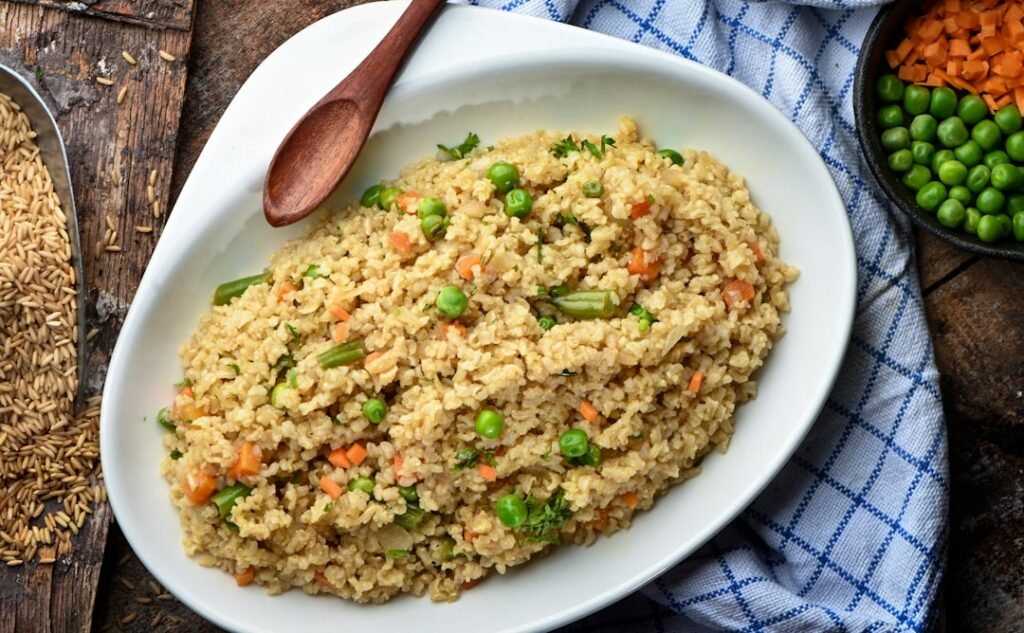
There was a time in our house when I tried to swap white rice for brown rice at dinner and got four very unimpressed faces staring back at me across the table. My 10-year-old pushed it around his plate like I had served him wet sand. My 15-year-old, bless him, at least tried a bite before declaring it “chewy in a bad way.” That was a few years ago. Today? Brown rice, farro, and quinoa are regular players in our weekly dinners — and nobody complains. In fact, my 12-year-old now specifically asks for my farro and roasted vegetable bowls.
What changed? I stopped treating whole grains like a health punishment and started cooking them properly. I learned which grains pair best with which flavors, how to season them so they taste like something worth eating, and — most importantly — how to build complete, filling dinners around them that my hungry crew of six actually finishes. If your family has resisted whole grains before, I want to show you that it is not the grain that failed. It was probably just the preparation.
This post is my honest, practical guide to cooking with whole grains as a Connecticut mom who needs dinner on the table fast, nutrition on every plate, and zero food going to waste. Let me walk you through what I have learned.
Why Whole Grains Matter More Than Most Parents Realize
I am not here to lecture — but I do think it is worth pausing for a second on why this matters. According to the Harvard T.H. Chan School of Public Health, whole grains contain the entire grain kernel — the bran, germ, and endosperm — which means they deliver more fiber, more B vitamins, and more minerals than refined grains. For growing boys who are constantly hungry, that fiber matters. It slows digestion, keeps blood sugar steadier, and keeps them fuller longer between meals.
For my family, I also think about long-term habits. My boys are going to grow up and cook for themselves eventually. If they grow up eating farro and quinoa and brown rice as normal, everyday foods, those habits come with them into adulthood. Teaching them that whole grains are just what dinner looks like — not some special health food — is one of the best things I can do for them. God gave us an abundance of nourishing foods. I want my boys to know how to use them.
The Grains We Actually Use In Our House (And How We Use Them)
I am not going to send you chasing down twelve obscure grains you have never heard of. These are the ones that actually live in my pantry and get used every single week.
- Brown rice: The most versatile whole grain we use. It takes about 40 to 45 minutes, but I cook a big batch on the weekend and use it all week. It works under stir-fry, inside stuffed peppers, alongside slow cooker chicken — everywhere white rice would go.
- Quinoa: My fastest whole grain option at about 15 minutes. Technically a seed but used like a grain, it is also a complete protein, which is fantastic for active boys. My 15-year-old, who is into sports, loves it in burrito bowls.
- Farro: This is the one that surprised me most. It is chewy, nutty, and incredibly satisfying. I find it at most Connecticut grocery stores now — Big Y and Stop and Shop both carry it. It takes about 30 minutes and is absolutely wonderful in soups and grain bowls.
- Whole wheat pasta: The easiest on-ramp to whole grains for picky kids. The texture is barely different from regular pasta when cooked properly, and it pairs with every sauce we already love.
- Barley: I use pearl barley most often in soups and stews. It thickens broth beautifully and adds a heartiness that makes a simple vegetable soup feel like a real dinner.
The Secret To Getting Kids To Accept Whole Grains Without A Fight
Here is what I figured out after years of trial and error: the grain itself is rarely the problem — it is the seasoning and the supporting ingredients. Plain brown rice with no salt tastes like cardboard. But brown rice cooked in low-sodium chicken broth with a little garlic and a squeeze of lemon? That is something my boys actually want more of.
My approach is to never serve any whole grain plain. I always cook grains in broth instead of water — it adds flavor without any extra work. I season the cooking liquid. I toast dry grains in a little olive oil for two minutes before adding the liquid, which brings out a deeper, nuttier flavor. And I always pair whole grains with something familiar and beloved — a protein they already love, a sauce they already ask for, a vegetable they already accept.
Start with whole wheat pasta if your kids are resistant. The flavor and texture are close enough to regular pasta that most kids barely notice. Once that becomes normal, you can slowly introduce quinoa in a dish where it plays a supporting role rather than the star. Then farro. Then barley. Give it time. My 6-year-old who once refused brown rice now eats it without a second thought because it has been on our table consistently for years.
Five Whole Grain Dinner Ideas That Feed A Hungry Family Of Six
These are not recipe cards with exact measurements — they are real dinner ideas I rotate through our weekly meals. Each one is built around a whole grain, designed to feed six people, and built to be finished completely.
1. Brown Rice Stuffed Bell Peppers: I mix cooked brown rice with ground turkey, diced tomatoes, garlic, Italian seasoning, and a little mozzarella. Stuff it into halved bell peppers, top with sauce, and bake at 375 degrees for about 35 minutes. My boys eat two halves each and the pan comes back empty every time. It is colorful, filling, and the rice gives it a heartiness that white rice cannot match.
2. Quinoa Chicken Burrito Bowls: This is a weeknight favorite. Cooked quinoa as the base, topped with shredded slow cooker chicken, black beans, corn, salsa, and a little plain Greek yogurt in place of sour cream. It takes less than 20 minutes to assemble if I have the quinoa and chicken prepped ahead. My batch cooking strategy on the weekends makes this one incredibly fast on a busy Tuesday night.
3. Farro Soup With White Beans and Kale: This is a one-pot dinner that my whole family loves on cold Connecticut evenings from October through April. Saute onion, garlic, and carrots in olive oil, add low-sodium chicken or vegetable broth, uncooked farro, a can of white beans, and a few big handfuls of kale. Let it simmer for 30 minutes. The farro absorbs some of the broth and makes it thick and hearty. Serve with whole grain bread and dinner is done.
4. Whole Wheat Pasta with Turkey Meat Sauce: This is the easiest swap in the world and the one I recommend to any family just starting out with whole grains. Make your normal meat sauce — ground turkey, crushed tomatoes, garlic, onion, Italian herbs — and serve it over whole wheat spaghetti. Cook the pasta to al dente so it does not get mushy. Nobody in my house has ever complained about this dinner. Nobody ever will.
5. Barley and Vegetable Beef Stew: This is a slow cooker recipe that practically makes itself. Chuck beef, diced carrots, celery, onion, diced tomatoes, low-sodium beef broth, and a cup of pearl barley. Cook on low for eight hours. The barley thickens the stew and makes it deeply filling. It is the kind of dinner that makes a cold November day feel like a blessing. My kids ask for this one by name.
How To Make Whole Grain Cooking Faster On Busy Weeknights
I will be honest — the main complaint I hear from Connecticut moms about whole grains is the cooking time. Brown rice takes 45 minutes. Farro takes 30. On a Tuesday when we just finished homeschool and someone has a practice, I do not have that kind of time either. Here is how I solve it.
- Cook in bulk on Sundays: I make a big pot of brown rice and sometimes a batch of farro every Sunday. It stores in the refrigerator for five days and reheats in the microwave with a splash of water in two minutes.
- Use a rice cooker: I set it and walk away. No watching, no timing, no burned bottoms. This is one of the best small appliance investments I have made for our family.
- Keep quinoa as your fast weeknight grain: 15 minutes, no pre-cooking required, done while the protein finishes. It is my Tuesday and Wednesday default.
- Stock instant brown rice for true emergencies: It is not quite as nutritious as long-cook brown rice, but it is still whole grain and it still beats white rice. Keep a box in the pantry for the nights when everything goes sideways.
The slow cooker is also one of my best allies for whole grain dinners — especially for barley-based soups and stews that can cook all day while we do school and errands.
Getting Kids Involved So They Actually Care About What They Are Eating
One of the things I love most about cooking with whole grains is that there is real, hands-on learning built into the process. The USDA MyPlate guidelines recommend that at least half of all grains eaten should be whole grains — and when my boys understand why that matters, they are so much more cooperative at the dinner table.
My 12-year-old now knows how to cook quinoa from start to finish. My 10-year-old can measure and toast farro in a pot before I add the broth. Even my 6-year-old helps rinse quinoa in a fine mesh strainer before it goes in the pot. Teaching these skills matters — not just for nutrition, but because a boy who knows how to cook whole grains will feed himself and his future family well someday. That is a legacy worth building one dinner at a time.
Start Small And Build From There
You do not have to overhaul everything overnight. Pick one grain — I suggest whole wheat pasta or quinoa — and start there. Make it one night this week. Do not announce it as a health upgrade. Just make the dinner and serve it. See what happens. Build from that one success.
Feeding a family well is not about perfection. It is about consistently making small choices that add up over months and years. Swapping to whole grains is one of those quiet, steady choices that pays off in ways you may not even notice until you look back and realize your kids just eat differently than they used to. Nourishing our families is one of the most practical ways we care for the people God has placed in our homes. I never take that lightly — even when dinner is just a bowl of farro soup on a Wednesday night in Connecticut.
Start with one grain. Make it taste good. Keep showing up at the table. That is all it takes.
