
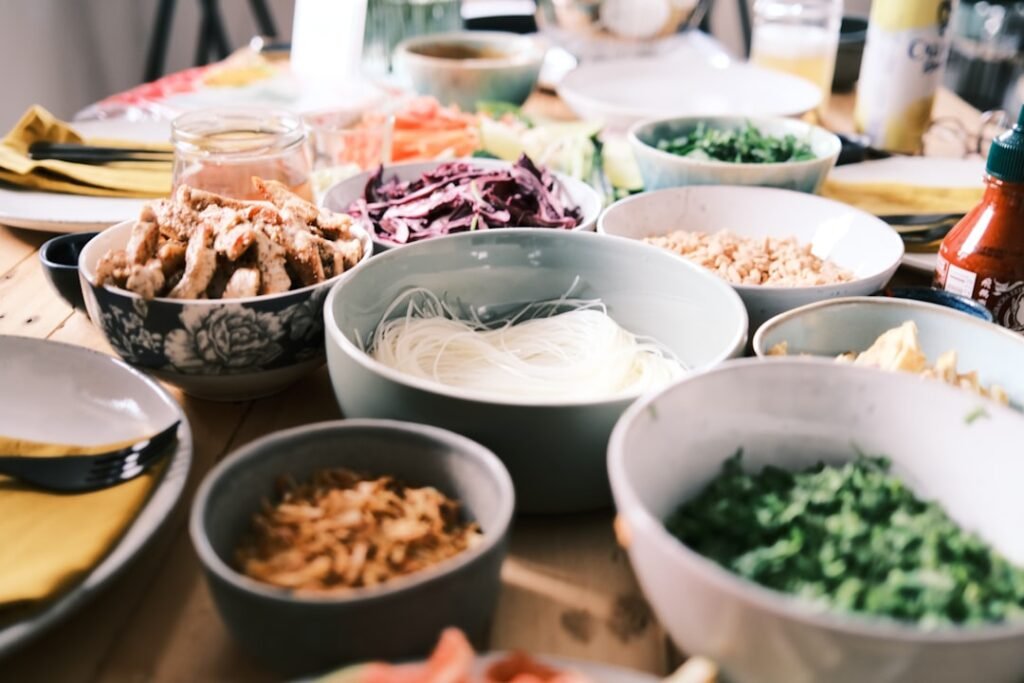
Sunday afternoons in our house have a rhythm to them. After church, after lunch, after the boys have scattered in four different directions — I sit down at the kitchen table with a notepad, a cup of tea, and what I can only describe as a quiet determination. Because if I don’t plan the week’s meals before Monday hits, we’re going to end up at 5:30 on a Tuesday scrambling for something that resembles dinner while someone is asking where his cleats are and someone else needs help with math. I’ve lived that version of the week. I don’t love it.
Meal planning changed our family’s life more than almost any other habit I’ve built in this kitchen. It saves money. It reduces stress. It means my boys eat real, nourishing food most nights instead of whatever was easiest to grab. And honestly? It has become one of the small, faithful ways I care for my family — making sure there’s always something good on the table, even on the hardest days.
If you’ve tried meal planning before and it fell apart by Wednesday, you’re not alone. This post is going to walk you through how I actually do it — not the perfect Instagram version, but the real version that works for a family of six in Connecticut with four hungry boys, a full homeschool schedule, and a budget that has to stretch.
Start With What You Already Know Works
The biggest mistake people make when they start meal planning is trying to cook brand-new recipes every single night. That is a recipe for burnout, not dinner. Instead, I always start my weekly plan by anchoring it with two or three meals I know my family loves and I can make without much thought. For us, that might be baked chicken thighs with roasted vegetables, a big pot of turkey chili, or sheet pan salmon with sweet potatoes. These are our “no-fail” meals — the ones where nobody complains and cleanup is manageable.
From there, I’ll add one new recipe to try, one easy slow cooker meal for a busy day, and one intentional “use what we have” meal toward the end of the week to clean out the fridge before grocery day. That framework — anchor meals, one new thing, one slow cooker day, one fridge cleanout — gives the week structure without making every night a production.
Plan Around Your Actual Week, Not an Ideal Week
I used to plan meals as if every evening would be calm and unhurried. Then I’d get to Thursday — which is our busiest homeschool co-op day — and realize I had planned a meal that needed 45 minutes of active cooking. That doesn’t work when we walk in the door at 5:15 and everyone is already hungry and tired.
Now I look at the calendar first. Busy evenings get the simplest meals. Mondays are lighter for us, so that’s when I’ll try something new or spend a little more time cooking. Thursdays get the slow cooker or something I prepped earlier in the day. Fridays are almost always something fun and lower-effort — homemade pizza, tacos, or breakfast-for-dinner — because we all deserve a little joy at the end of the week.
Think honestly about your week before you write a single meal down. Which nights do you have activities? Which afternoons do you have margin? Build your meal plan around real life, not the life you wish you had. This is one of the most practical things I know, and it took me longer than I’d like to admit to actually do it consistently.
The Grocery List Is Part of the Plan
A meal plan without a grocery list is just a wish list. Once I have the week mapped out, I go through each meal and write down every ingredient I’ll need — then I check it against what’s already in my pantry, fridge, and freezer. This is where real savings happen.
I organize my grocery list by section of the store: produce, proteins, dairy, pantry staples, frozen. It sounds small, but this one habit cuts my shopping time significantly and means I’m not wandering the aisles throwing things in the cart without a purpose. With a family of six, an unplanned grocery run can turn into a $50 deviation from the budget before you even blink.
I also keep a running “pantry inventory” — nothing fancy, just a note on my phone of what proteins I have in the freezer and what staples are getting low. Connecticut winters especially teach you the value of a well-stocked pantry. When a snowstorm rolls in and you’re not making a store run, you want to know what you’re working with.
For families looking to stretch their grocery budget further, the USDA Food and Nutrition resources offer practical guidance on building balanced, affordable meals — worth bookmarking if you’re trying to feed a large family on a real budget.
Batch Cooking Is Your Best Friend on Weekends
I don’t do full-scale meal prep where every container is labeled and portioned for the week. That’s just not realistic with four boys underfoot on a Saturday. But I do practice what I call strategic batch cooking — making a few things ahead that will make the week dramatically easier.
Most Saturdays I’ll cook a big batch of grains — brown rice, quinoa, or farro — and store it in the fridge. I’ll roast a sheet pan of vegetables that can be used in multiple ways across the week. I might cook a pound of ground turkey to use in tacos on Monday and pasta sauce on Wednesday. These aren’t full meals — they’re building blocks. And having them ready means dinner on a busy Tuesday goes from a 45-minute project to a 20-minute assembly.
My 12-year-old has actually become my Saturday prep helper. He’s at the age where he can safely handle most kitchen tasks with supervision, and having him wash and chop vegetables or measure out grains is both genuinely useful and a real life skills lesson. Some of our best conversations have happened over a cutting board on a Saturday afternoon. I try never to take that for granted.
Build in Flexibility Without Abandoning the Plan
Life happens. Someone gets sick. A friend needs help. The day goes sideways in ways you never saw coming. A rigid meal plan that can’t bend will snap — and then it’s easy to throw the whole thing out.
I build flexibility into the plan from the start by keeping what I call a “plan B” list — five or six meals I can make entirely from pantry and freezer staples with very little prep. Things like lentil soup, bean and rice bowls, pasta with marinara, scrambled eggs with toast and fruit, or quesadillas with canned black beans. These are not gourmet. They are not Instagram-worthy. But they are nourishing, fast, and made with ingredients I almost always have on hand.
When the planned meal falls apart, I don’t spiral — I just go to the Plan B list. And honestly? My boys don’t love every elaborate meal I plan. But they will eat eggs and toast without complaint every single time. Sometimes the humble meal is the gift.
Involve the Family in the Planning Process
One thing that made meal planning stick for us was making it a small family activity rather than something I do alone and then announce. Now, at the beginning of the week, I ask each of my boys to suggest one food or meal they’d like that week. My 6-year-old usually asks for something involving noodles. My 15-year-old has gotten surprisingly adventurous and will often suggest something he saw online that he wants to try. My 10-year-old almost always asks for smoothies or something he can help make himself.
I can’t always say yes to every request — a family of six means we’re always balancing preferences against nutrition, time, and budget. But knowing that I genuinely consider their input makes them more willing to try new things and less likely to grumble about what’s on the table. It turns dinner from something that happens to them into something they’re part of creating.
This is also a gentle way to get your kids involved in cooking and meal decisions from an early age — a habit that pays dividends for years as they grow into young men who know how to feed themselves well.
Connecticut Families: Plan Around the Seasons
One of the things I genuinely love about living in Connecticut is that the seasons are so distinct — and each season brings its own rhythm to what ends up on our table. Meal planning is so much more enjoyable (and affordable) when you plan around what’s actually fresh and available locally.
In the summer and fall, our meal plans lean heavily on what’s coming out of local farms and farmers markets — sweet corn, tomatoes, zucchini, butternut squash, apples, and fresh greens. In winter, we shift to heartier, warming meals that use root vegetables, dried legumes, and whatever we stocked from the fall harvest season. Spring brings asparagus, peas, and the first tender greens, and we celebrate every bit of it.
Planning seasonally isn’t just more flavorful — it stretches the grocery budget meaningfully. Produce that’s in season locally costs less, tastes better, and is at its nutritional peak. If you want to learn more about what’s growing in Connecticut right now, the Connecticut Grown program is a fantastic resource for finding local farms and seasonal availability throughout the state.
A Simple Template to Get You Started
If you’re brand new to meal planning or you’ve tried and given up before, here is the simplest possible framework to start with. Don’t overcomplicate it.
- Monday: New recipe or something slightly more involved — you have the most energy at the start of the week
- Tuesday: Quick and easy — stir fry, grain bowls, or a simple protein with roasted vegetables
- Wednesday: Slow cooker or something prepped ahead — midweek is when life piles up
- Thursday: Your simplest possible meal — this is your busiest day, plan accordingly
- Friday: Fun meal — tacos, homemade pizza, breakfast for dinner — something everyone looks forward to
- Saturday: Batch cook and use leftovers creatively — soups, grain bowls, or wraps
- Sunday: One larger, intentional family meal — something that brings everyone to the table together
That Sunday meal matters to me in a way that goes beyond nutrition. It’s the one meal each week where we sit down without rushing, where we pray together, and where we actually look at each other. Whatever is on the table — whether it’s something elaborate I worked on all afternoon or a simple roast chicken — it’s about the gathering more than the food. The food is just the reason to come together.
You Don’t Have to Do This Perfectly
Can I tell you something I wish someone had told me earlier? You do not have to meal plan perfectly for it to work. Some weeks my plan falls apart by Tuesday. Some weeks I forget to thaw something and we end up improvising. Some weeks I just don’t have it in me to cook something thoughtful, and we eat simple food without apology.
The goal isn’t perfection. The goal is to have a plan more often than you don’t — because even an imperfect plan beats starting from scratch every evening at 5:00. A little structure creates a lot of peace. And peace in the kitchen on a Tuesday evening is worth more than I can tell you.
Start small. Plan three dinners instead of seven. Build from there. Let it grow into a habit rather than trying to implement the whole system at once. Your family will eat better, your budget will thank you, and you might just find — like I did — that Sunday afternoon at the kitchen table with a notepad and a cup of tea becomes one of the quietest, most grounding moments of your week.
